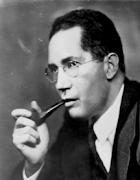
TALK TO THE DADDY

Hello. Come on in. The daddy writes about current events, literature, music and, once in a while, drops something on you from back in the day to make you pause and ponder, stop and stare, and begin to wonder. Who knows? You may start to pace the floor, shake your head from side to side, then fall down on bended knees in a praying position and cry, "Lawd, have mercy! What is this world coming to?" Check yourself! But this blog is NOT about the daddy. It's about you: your boos, your fam, your hood, your country...our hopes and dreams of a better tomorrow. So let's make a pact: the daddy will put it on the track if you'll chase it down and hit him back. Together, we can definitely take it to another level. Shall we?"

Tuesday, April 14, 2009

Langston Hughes' Weary Blues


"The poem is a fitting opening not only to this volume, but to all of Hughes's volumes. It combines traditional blues stanzas that emphasize the roots of African-American experience, touches of vaudeville blues as the roots were being "refined," pride in African-American creativity and forms of expression, and a sense of the weariness that ties together generations of African-Americans. With the words "Sweet Blues," Hughes strikes upon the central paradox with which the poem attempts to come to terms. It is one of his central themes."
--Trace Stevens


"The younger Negro artists who create now intend to express our individual dark-skinned selves without fear or shame. If white people are pleased we are glad. If they are not, it doesn't matter. We know we are beautiful. And ugly, too. The tom-tom cries, and the tom-tom laughs. If colored people are pleased we are glad. If they are not, their displeasure doesn't matter either. We build our temples for tomorrow,strong as we know how, and we stand
on top of the mountain free within ourselves."

--Langston Hughes


Listen up. The daddy knows that Langston Hughes is a poet you already know and appreciate. But you know what? The daddy just couldn't celebrate National Poetry Month without saying something about one of America's greatest poets.

Langston was a baad brotha; and today he is celebrated not only for his great poetry but for the courageous stands he took on controversial issues in his time : from the 1920's all the way up to the 1960's. The brotha wrote on revolution, communism, poverty, racism, anti-semitism, the war in Spain, the black militancy of the 1960's, Hitler-- all of the issues. And he wrote with clarity and style. This is why Langston Hughes continues to be read and celebrated by people all over the world-- because many of the issues of his time are still issues of our time today.


In his essay, "The Negro Artist and the Racial Mountain," first printed in The Nation magazine in 1926, Hughes drew the line, saying literature should be used as a tool to better understand and improve the conditions of African Americans.


Hughes took his stance at a time when some black writers, usually those who came from middle or upper-income families, took the position that they didn't want to become black writers but writers or artists. The black press, also from the upper-crust and light-skinned, sided with these writers and that viewpoint. These were the "Black Republicans" of their day, the shoe shining Michael Steeles and handkerchief headed Aunt Jemimas of the "Negro Elite." But Langston was different.

True, other writers such as novelist Charles W. Chestnutt and Laurence Dunb
ar had developed this principle and written with this principle in mind. But Hughes was the first to clearly state this principle and declare it as a kind of manifesto for black writers and black artists of his time.

Hughes made this declaration at a time (the 1920's and the 1930's) when many Americans, black and white, saw poetry as lyrical, speaking of romance, love and beauty in nature. However, Hughes saw poetry as social as well, speaking to the individual in relation to the society in which he or she lived. He focused specifically on the state of black Americans within the so-called American democracy.
The book "The Weary Blues" was divided between lyrical and social poetry. However, his next book of poety, "Fine Clothes to the Jew," was all social poetry, much of it written in black dialect. But as Stevens suggests, "The Weary Blues" signaled where a young Langston Hughes was going with his writing. "Fine Clothes to the Jew" cemented the deal. It said in so many words what "The Weary Blues" had already concluded:

that this young artist was going to speak to the conditions of black people as an oppressed people in white nation-state that, ironically, prided itself on being a democratic republic.

And there would be no turning back.

-----------------------------------------------------------------

The Weary Blues


by Langston Hughes


Droning a drowsy syncopated tune,
Rocking back and forth to a mellow croon,
I heard a Negro play.
Down on Lenox Avenue the other night
By the pale dull pallor of an old gas light
He did a lazy sway . . .
To the tune o' those Weary Blues.
With his ebony hands on each ivory key
He made that poor piano moan with melody.
O Blues!
Swaying to and fro on his rickety stool
He played that sad raggy tune like a musical fool.
Sweet Blues!
Coming from a black man's soul.
O Blues!
In a deep song voice with a melancholy tone
I heard that Negro sing, that old piano moan--
"Ain't got nobody in all this world,
Ain't got nobody but ma self.
I's gwine to quit ma frownin'
And put ma troubles on the shelf."

Thump, thump, thump, went his foot on the floor.
He played a few chords then he sang some more--
"I got the Weary Blues
And I can't be satisfied.
Got the Weary Blues
And can't be satisfied--
I ain't happy no mo'
And I wish that I had died."
And far into the night he crooned that tune.
The stars went out and so did the moon.
The singer stopped playing and went to bed,
While the Weary Blues echoed through his head.
He slept like a rock or a man that's dead.


Monday, April 13, 2009

Nikki Giovanni & Audre Lorde, two poets you should know

Today, the daddy is feeling good. He has already awaken, had a cup of java, lingered in his backyard a bit then strolled a few blocks up and down the street near the front of his house.

Still in his brown housecoat, he's sitting now in his kitchen, sipping a cup of coffee from his "Mickey's Diner" cup (named after a famous cafe in St. Paul, Minnesota. The cafe is actually a train car, small and intimate. Sometimes, the daddy goes there and talks to the customers, many of whom are homeless, including veterans of Vietnam and Iraqi war). And he's listening to Mahalia Jackson sing "Precious Lord" and "We shall overcome" and blogging.


Having had a restful weekend and feeling no desire to do any work at all, the daddy is chilling. In fact, he is thinking about the things that help him to relax: Listening to Mahalia Jackson, Aretha Franklin, The Five Blind Boys and The Soul Stirrers sing gospel on Sundays; walking by the Mississippi river on weekends; and reading by the fireplace until he goes to sleep during week nights.

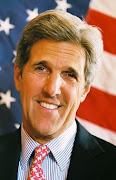
The daddy especially loves to read poems about relaxation, meditation, restfulness and calm. He loves poems about water, work and play on farms (the type of stuff Seamus Heaney writes) or simple things around a house like gardening, bathing or cooking. Poet Nikki Giovanni may be better known for fiery poems she wrote about revolution and black militancy in the sixties, but this is vastly overstated. The truth? She wrote then-- and still writes now-- about herself, her relationships, her family and the world around her. In "A Certain Peace," Giovanni (photo on the right) speaks of the importance of making time to be alone. After many years, Giovanni continues to astound with her mastery of her craft and her tremendous imagination.

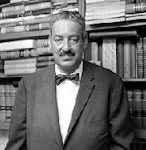
The late Audre Lorde was more than a poet. She was a social activists for many causes, including the cause of research to conquer breast cancer. Like Giovanni, she was mistakenly stereotyped as a person who wrote poetry that's too political and/or didactic. But she also wrote poetry that was bittersweet and grounded in black history, the missing pages of world history. In "The Day They Eulogized Mahalia," Lorde (photo on the left) puts Mahalia Jackson's death within the context of black life in Chicago.


A Certain Peace
by Nikki Giovanni


it was very pleasant
not having you around
this afternoon
not that i don't love you
and want you and need you
and love loving and wanting and needing you

but there was a certain peace
when you walked out the door
and i knew you would do something
you wanted to do
and i could run
a tub full of water
and not worry about answering the phone
for your call
and soak in bubbles
and not worry whether you would want something
special for dinner
and rub lotion all over me
for as long as i wanted
and not worry if you had a good idea
or wanted to use the bathroom

and there was a certain excitement
when after midnight you came home
and we had coffee
and i had a day of mine
that made me as happy
as yours did you

The Day They Eulogized Mahalia
by Audre Lorde

The day they eulogized Mahalia
the echoes of her big voice were stilled
and the mourners found her
singing out from their sisters mouths
from their mothers toughness
from the funky dust in the corners
of Sunday church pews
sweet and dry and simple
and that hated Sunday morning fussed over feeling
the songs
singing out from their mothers toughness
would never threaten the lord's retribution
any more.

Now she was safe
acceptable
that big Mahalia
Chicago turned all out
to show her that they cared
but her eyes were closed
And although Mahalia loved our music
nobody sang her favorite song
and while we talked about
what a hard life she had known
and wasn't it too bad Sister Mahalia
didn't have it easier
earlier
Six Black children
burned to death in a day care center
on the South Side
kept in a condemned house
for lack of funds
firemen found their bodies

The daddy thinks he'll take a long, hot bath and think about Nikki Giovanni and Audre Lorde-- two poets you should know.

Sunday, April 12, 2009

Paul Laurence Dunbar and Georgia Douglas Johnson, two poets you should know

"Your world is as big as you make it."
--Georgia Douglas Johnson

"
“I know why the caged bird sings, ah me, when his wing is bruised and his bosom sore; when he beats his bars and he would be free, it is not a carol of joy or glee, but a prayer that he sends from his heart's deep core.”
--Paul Laurene Dunbar

Today, the daddy is
feeling tow great poets, two poets you should know: Georgia Douglas Johnson and Paul Laurence Dunbar. Many poets wrote positive poems about America. They marveled at the great American frontier and expanse. They celebrated the American spirit that was full of opportunity and promise. Walt Whitman's "I Sing America" is a good example of such poetry. But not all poets wrote from this perspective.

Many African American poets spoke to the failure of America to live up to its glorified principles of democracy and enticing promises to "the least of these," its African American citizens.

But these poets also celebrated those African Americans who fought to make the American dream come true for African Americans and, by doing so, challenged America to make its principles and promises a living reality for all Americans. By continuing to challenge America to live up to its principles and to be the best that it can be, they held those principles high as goals and kept them in the forefront as American grew and became a more diverse nation in ethnicity, religion and politics. In this sense, they fought not only for African Americans, but for all Americans, for all times.

Best known for the poem "I Want to Die While You Love Me," Georgia Douglas Johnson wrote poems that were personal, very honest. In the poem "Black Woman," she speaks to the failure of American to live up to its promise for many African Americans-- so much so that she questioned whether a woman should give birth to a back child and have him or her live in such a "cruel" world of white oppression.


Paul Laurence Dunbar is one of America's greatest poets. He may be best known for the poem "We Wear the Mask." But he wrote many great poems that were not viewed highly because they were written in black dialect.

The poem "Frederick Douglas" was written shortly after the death of Frederick Douglas. It was not a eulogy so much as a celebration of Douglas courageous and consistent advocacy for African Americans, his untiring effort to make America a land of liberation and freedom for all Americans.


Black Woman
by Georgia Douglas Johnson

Don’t knock at the door, little child,
I cannot let you in,
You know not what a world this is
Of cruelty and sin.
Wait in the still eternity
Until I come to you,
The world is cruel, cruel, child,
I cannot let you in!

Don’t knock at my heart, little one,
I cannot bear the pain
Of turning deaf-ear to your call
Time and time again!
You do not know the monster men
Inhabiting the earth,
Be still, be still, my precious child,
I must not give you birth!
Frederick Douglass
by Paul Laurence Dunbar

A hush is over all the teeming lists,
And there is pause, a breath-space in the strife;
A spirit brave has passed beyond the mists
And vapors that obscure the sun of life.
And Ethiopia, with bosom torn,
Laments the passing of her noblest born.

She weeps for him a mother's burning tears--
She loved him with a mother's deepest love.
He was her champion thro' direful years,
And held her weal all other ends above.
When Bondage held her bleeding in the dust,
He raised her up and whispered, "Hope and Trust."

For her his voice, a fearless clarion, rung
That broke in warning on the ears of men;
For her the strong bow of his power he strung,
And sent his arrows to the very den
Where grim Oppression held his bloody place
And gloated o'er the mis'ries of a race.

And he was no soft-tongued apologist;
He spoke straightforward, fearlessly uncowed;
The sunlight of his truth dispelled the mist,
And set in bold relief each dark hued cloud;
To sin and crime he gave their proper hue,
And hurled at evil what was evil's due.

Through good and ill report he cleaved his way.
Right onward, with his face set toward the heights,
Nor feared to face the foeman's dread array,--
The lash of scorn, the sting of petty spites.
He dared the lightning in the lightning's track,
And answered thunder with his thunder back.

When men maligned him, and their torrent wrath
In furious imprecations o'er him broke,
He kept his counsel as he kept his path;
'Twas for his race, not for himself he spoke.
He knew the import of his Master's call,
And felt himself too mighty to be small.

No miser in the good he held was he,--
His kindness followed his horizon's rim.
His heart, his talents, and his hands were free
To all who truly needed aught of him.
Where poverty and ignorance were rife,
He gave his bounty as he gave his life.

The place and cause that first aroused his might
Still proved its power until his latest day.
In Freedom's lists and for the aid of Right
Still in the foremost rank he waged the fray;
Wrong lived; his occupation was not gone.
He died in action with his armor on!

We weep for him, but we have touched his hand,
And felt the magic of his presence nigh,
The current that he sent throughout the land,
The kindling spirit of his battle-cry.
O'er all that holds us we shall triumph yet,
And place our banner where his hopes were set!

Oh, Douglass, thou hast passed beyond the shore,
But still thy voice is ringing o'er the gale!
Thou'st taught thy race how high her hopes may soar,
And bade her seek the heights, nor faint, nor fail.
She will not fail, she heeds thy stirring cry,
She knows thy guardian spirit will be nigh,
And, rising from beneath the chast'ning rod,
She stretches out her bleeding hands to God!

Friday, April 10, 2009

Sterling Plumpp, a poet you should know

"Poems are bridges, neon
reaches across worlds
where language seeks
a voice for itself. where words
are step up towers
of perceptions. I exist
in language. I invent
out of ruins .
Out of namesakes sand wind
scatters my soul."

-- Sterling Plumpp

Listen up. Today, the daddy is feeling Sterling Plumpp, definitely a brotha you should know. You should know him if for no other reason than the fact that he wrote, The Mojo Hand Calls, I Must Go. Now, before this work, Plumpp had written four other books of poetry and Black Rituals, a prose about the social psychology that supports oppression in black communities. In 1975, he won an award for the book Clinton. But the The Mojo Hands Call, I Must Go was his most comprehensive and his best.


For this book, the brotha got props from all over the place. He won the Illinois Arts Council Award for Poetry and the Carl Sandburg Literary Award for Poetry from the Friends of the Chicago Public Library in 1983.Everyone talked about the poem "Fractured Dreams," a poem about the self-doubt and self-damning that is a part of the collective identity which Plumpp feels is best expressed in the blues tradition. And they talk about the poem of him returning to his roots, but not physically but more historically and psychically, by reconnecting to those rural rituals and beliefs, the life force, the Mojo hands, that sustained him and his people in the past.

The early years

Yes, Plumpp eventually became successful. Hey, he even won a million bucks from the Illinois lottery. But don't get it twisted. From the very beginning, Plumpp had a tough life. He lived with grandparents in Clinton, Mississippi, Mattie and Victor Emmanuel. They were sharecroppers. Both Sterling and his brother worked the fields. His grandparents lived 10 miles from the school; so Sterling and brotha often never made it there. In fact, he didn't really start school until they were 8 or 9 years old. Still, he graduated as valedictorian in 1960. Still, Sterling had a difficult time at St. Benedict College, and an even worse time in the military.

Things didn't seem to get better until he became Professor of English and African American Studies at The University of Illinois in Chicago. This is where he earned two Amoco-Silver Circle Awards for excellence in teaching. This is also where he won the Carl Sandburg Literary Prize for poetry for his writing of "The Mojo Hands Call, I Must Go" in 1983.


But those tough times for Sterling seemed to make him sensitive to the concerns of black communities and the blues tradition. That's why the daddy's favorite book of Plumpp is not The Mojo Hands Call, I Must Go but BLUES: The Story Always Untold. It's in BLUES where Plumpp writes:

"...It is the blues/crawling
over evening for a
feast. Nobody hears
my dungeon screams
as loneliness tapdances
inside my skull.
The windmill of moans
churns and the long gulf
of pain stretches in veins.
It is the blues. The grassy
head of anxiety/coughing
up dues/The under ache
drowning my name. The crackling
hurt sizzling in pots
of memories. Loss and troubles
boiling in my heart. It is
the blues/lowdown in evil."

But the daddy's favorite poems of Plumpp is about Howlin Wolf and Chicago's great guitarist Lurrie Bell. When Bell plays, says Plump,

"He speaks scared chords
a guitar screams in his
eyes. Because he is some
one shot out of a shot
gun house by white
lightning that makes him
a.c.h.a. high
rise resident...
He is a part of speech
therapy we master
to speak sanity"


And his Howlin Wolf poem is about the healing and redemptive powers of the blues in the face of hard times and letting the good times roll, not matter what other people think:

Howlin Wolf

He
annoints the sun: lingering
spells of its appreciation.
Drag
their tales round night's confined spirit.
Let it
out into urges
lonely the unfree memorize
In shacks
and stereotypes covering faces like quilts.
Let it
out into nocturnal transformations
in the bottom.
Where evil going on
flees the superstition of light.
His voice,
a meteor, hurled from distances
in depths of tribulations,
howls willingness in slaves.
They meet
at the cross
roads in memory:
steal three hundred ounds of heavenly joy
from kitchenettes, kitchens, scrubbing floors
and memories of long rows
and broken men.
Each
ritual he revives preachers
condemned in downcast eyes.
Give
all the love blues
didn't steal.

Reaches
to touch hands.
Bends
to kiss lips.
Clicks
myths in his throat and
bellows vaults of dust from longings
hardtimes imprisoned.
Opens
gates in his voice and drains
his pain to moods of celebration.
Turns
on the love
light. Lowers
his pain to moods of celebration.
Turns
on the love
light. Changing
folks
like a natural baptism.
Changing evil's face
like a natural healing
lordy, lordy
changing
evil like a healing
found man

Always a teacher, Plumpp continues to write and nurture the talents of young
African American writers. He's a poet you should know and never forget.
------------------------------------------------------------------------------------
Major works by Steling Plumpp:
  • Hornman, 1996
  • Harriet Tubman, Adjoa J. Burrowes (Illustrator), Published 1996
  • Ornate With Smoke, 1997
  • Paul Robeson (a children's book), Adjoa J. Burrowes (Illustrator), 1998
  • Blues: The Story Always Untold, 1989
  • Half Black, Half Blacker, 1970
  • Johannesburg and Other Poems, 1993
  • Mojo Hands Call, I Must Go, 1982
  • Somehow We Survive: An Anthology of South African Writing, 1982
  • Steps to Break the Circle (to be published)
  • Development Arrested: Race, Power and the Blues in the Mississippi Delta by Clyde Woods, Sterling Plumpp (Contributor)

Thursday, April 9, 2009

Irene Morgan Kikaldy, a hero you should know

"If something happens to you
which is wrong, the best thing to
do is have it corrected in the best way you can. The best thing for me to do was take it to the Supreme Court.
--Irene Morgan Kikaldy, in 1984

Listen up. Today, the daddy interrupting the celebration of great African American
poets for a day to say to Irene Morgan Kikaldy, on her birthday, "Thanks you for standing up to racism and being a hero and a person we all should know."

Check this: The daddy's a black man who doesn't have to ride Jim Crow: doesn't have to sit in the back of the bus, and when boarding, doesn't have to put up with a bus driver calling the daddy or other black folks names under his breath or stating in a very harsh tone, "Move along, niggas!" In fact, he doesn't ha
ve to put with being humiliated in any way, thanks to some courageous people who, by refusing to stand, ensured that he could sit anywhere and be respected as a human being.

Now, when the daddy boards a bus, he sits at any seat that's unoccupied. Wh
ether he's going downtown on weekends to get a little crazy and paint the town red in Minneapolis, or going "down home" to Atlanta, Georgia to re-acquaint himself with old folks who dispense motherwit like water out of faucet and life-lessons like gulps of moonshine on a back porch.

When the daddy goes home, his former neighbors like to put in their "two cents worth" of motherwit and life-lessons. Neighbors? You know, the ones his parents made him call uncles and aunts, the ones who made him go to the corner grocery store and buy them CC (whatever that was) and snuff, the ones who only spoke ebonics. Now, the daddy's ride to see them is all good: hassle-free. No drama. Just an aching back from the long ride. He has seen worse.

Now, like the daddy, you board the bus, and nobody tells you where to sit. Now, when you give up your seat, it's out of kindness to an elder male who might slip and fall or an older lady trying to negotiate the rail while carrying bags.


Irene Morgan Kikaldy in 2000
receiving honors in Virgina,
Photo, AP

For this change, give thanks to the woman who really started it all. Give up a couple of serious double high-fives all around for Ms. Irene Morgan Kikaldy. Do you know her? Did you know that, long before Rosa Parks refused to give up a seat to a white person in Montgomery in 1955, Ms. Kirkaldy, refused to do the same in 1944, 11 years earlier in Virginia? Did you know that, when the officer came to arrest her, she fought him, kicking him in the groin; and she was pulled off the bus kicking and screaming.

Yes, Ms. Kikaldy (know as Irene Morgan then) was feisty lady alright, so feisty that she took her case all the way to the U.S. Supreme Court... and won! On June 3, 1946, the U.S. Supreme Court declared that segregated busing during interstate travel to be unconstitutional and set a strong precedent for future dispensation of discriminatory cases with respect to travel.

And did you know that The NAACP lawyer who argued her case before that august body was? A young Thurgood Marshall, the same Thurgood Marshall who would later be appointed to that court.

And did you know that the subsequent "freedom rides" of which people like now Rep. John Lewis, the organizer Bayard Rusting were involved had as its genesis in that same law that Ms. Kikaldy won at the Supreme Court level against discrimination during interstate travel? What the freed rides were all about was thie simple logic that, if you can't discriminate in interstate travel in Virginia, you can't do it anywhere else in the country. They were testing the law and the government to make sure what was put in law became public practice.

And, yes, one of the leaders of the freedom Rides was Bayard Rustin, who was an organizer for a group called The Journey of Reconciliation at the time but would later become an adviser to Dr. Martin Luther King Jr. and the chief organizer of the March on Washington. But speaking of Ms. Kikaldy's efforts that started it all, Raymond Arsenault, author of the book "Freedom Riders," wrote:

“She was young, attractive, articulate and, judging by her poised performance in Saluda, strong enough to withstand the pressures of a high-profile legal battle."


As for her later life, in her fifties, she ran a child-care center with her second husband, Stanley Kirkaldy. And she went back to school. At age 68, she received a bachelor's degree from St. John's University. Five years later, she received a master's in Urban Studies from Queens College. In 2000, Glouchester County, where she got on the Greyhound bus and began her remarkable ride with history, honored her on its 350th anniversary. In 2001, President Bill Clinton awarded her the Presidential Citizens Medal, the second highest honor that could be bestowed on an American citizen. The citation read:

“When Irene Morgan boarded a bus for Baltimore in the summer of 1944, she took the first step on a journey that would change America forever.”

Yes, today the daddy's sipping from the cup of history. He's feeding to his soul the the already warm love of Irene Morgan Kirkaldy. The poetry of her actions made the daddy-- no, made us all-- singer a little louder and with greater conviction, "We shall overcome" and "I ain't gon let nobody/turn me around/turn me around/turn me around."

To the Creator the daddy prays:

"Creator:
We raise our voices as one and shout,
Thank you! Thank you! Thank you!
Thank you for bringing for to earth, for give her the courage
to sit with us, to fight us in the battle for civil rights and against hopelessness
and despair.

Thank you for sending us Irene Morgan Kikaldy,
a lovely, courageous woman who brought sunlight to a movement,
confidence and hope that a sun people could fight and win
in a cold and distant land and thereby redeem their souls.

Amen."

Wednesday, April 8, 2009

Lucille Clifton, a poet you should know

Things don't fall apart. Things hold. Lines connect in thin ways that last and last and lives become generations made out of pictures and words just kept."
--Lucille Clifton

"People wish to be poets more than they wish to write poetry, and that's a mistake. One should wish to celebrate more than one wishes to be celebrated."
--Lucille Clifton

Poet Lucille Clifton is the winner of the 2007 Ruth Lilly Poetry Prize, one of the most prestigious awards given to American poets. In the year 2000, she won the National Book Award for her poetry book, Blessing the Boats: New and Selected Poems 1988-2000. Two of her poetry collections (Good Woman: Poems and a Memoir 1969-1980, and, Next: New Poems), were chosen as finalists for the Pulitzer Prize in 1988. She was elected Chancellor of The Academy of American Poets in 1999. She served as poet laureate of Maryland from 1974 to 1985.

Clifton’s writing is personal, but it immediately connects to readers and their lives.

The daddy is thinking about two of her poems: “she loved” and “at the cemetery, walnut grove plantation, south Carolina, 1989.”

As Clifton explains it in “The Language of Life,” Bill Moyer’s book about 34 poets, she is a widow of more than a decade. She said that, when her husband of some 30 years died suddenly, a part of her didn’t want to go on. Eventually, however, she decided to honor him and their good marriage by continuing to live; and she expressed her feelings in “she lived.”

she lived

after he died
what really happened is
she watched the days
bundle into thousands,
watched every act become
the history of others,
every bed more
narrow.
but even as the eyes of lovers
strained toward the milky young
she walked away
from the hole in the ground
deciding to live. and she lived.

But Clifton admits that this decision wasn’t an easy one-- that remaining present, staying calm and sane in a world filled with so much hate can be challenging and takes courage. She put it this way:

“…every day there are things that would make one hate. So you have mention them and as much as possible to not to hate. Every day there is something that would make you afraid, and you have to try not let it stop you…That’s where the honor is. Honor is not in not acting because you are afraid. Nor is there honor in acting when you are not afraid. But acting when you are afraid, that’s where the honor is.”

And Clifton’s attempt to talk to slaves at a cemetery on a former slave plantation, to get them to say their names, recalls poet Rita Dove standing in the middle of battlefields in France, communing with the spirits of black soldiers who fell there fighting for a freedom that they would never know at home. Here's Clifton at a slave cemetary in South Carolina:

at the cemetery, walnut grove plantation, south carolina, 1989

among the rocks
at walnut grove
your silence drumming
into my bones,
tell me your names.

nobody mentioned slaves
and yet the curious tools
shine with your fingerprints.

nobody mentioned slaves
but somebody did this work
who had no guide, no stone,
who moulders under rock.

tell me your names,
tell me your bashful names
and I will testify.

the inventory lists ten slaves
but only men were recognized.

among the rocks
at walnut grove
some of these honored dead
were dark
some of these dark
were slaves
some of these slaves
were women
some of them did this
honored work.

tell me your names
foremothers, brothers,
tell me your dishonored names.
here lies
here lies
here lies
here lies
hear

And Clifton brings down the house with "homage to my hips:"

homage to my hips

these hips are big hips
they need space to
move around in.
they don't fit into little
petty places. these hips
are free hips.
they don't like to be held back.
these hips have never been enslaved.
they go where they want to go.
they do what they want to do.
these hips are mighty hips.
these hips are magic hips.
i have known them
to put a spell on a man and
spin him like a top!

Drink from the cup of poetry. Go ahead: have some Lucille Clifton, a poet you should know.

Monday, April 6, 2009

Mari Evans, a poet you should know

"In addition to writing poetry, Evans has written articles and essays, as well as children's books and plays. She has been a professor at universities, including Cornell University, Indiana University, Spelman College, Purdue University, State of New York at Albany, University of Miami at Coral Gables, and St. Louis. In 1997, she was celebrated with her photo on a Ugandan postage stamp. She was nominated for a Grammy Award in 2002 for the liner notes she wrote for The Long Road Back To Freedom: An Anthology of Black Music." --Wilkipedia

“Idiom is larger than geography; it is the hot breath of a people singing, slashing, explorative. Imagery becomes the magic denominator, the language of a passage, saying the ancient unchanging particulars."
--Mari Evans,
poet

A native of Toledo, Ohio, Mari Evans was raised in a very traditional black family. She attended the University of Toledo.

Evans has lectured on literature, written, directed and produced a television program called “The Black Experience,” written a play (“River of My Song”), a musical based on Zora Neale Hurston’s “Their Eyes Were Watching God” and taught at Indiana University, the State University of New York at Albany, the University of Miami at Coral Gables and at Spellman College, Atlanta.

She has won numerous awards for her poetry, including the Indiana University Writers' Conference award, the Black Academy of Arts and Letters' first annual poetry award.

The poem “I Am a Black Woman” speaks to the pain of the black experience but also the resilience of black women.

I am a Black Woman

I am a black woman
the music of my song
some sweet arpeggio of tears
is written in a minor key
and I
can be heard humming in the night

I saw my mate leap screaming to the sea
and I/with these hands/cupped the lifebreath
from my issue in the canebrake
I lost Nat's swinging body in a rain of tears
and heard my son scream all the way from Anzio
for Peace he never knew....I
learned Da Nang and Pork Chop Hill
in anguish
Now my nostrils know the gas
and these trigger tire/d fingers
seek the softness in my warrior's beard

I am a black woman
tall as a cypress
strong
beyond all definition still
defying place
and time
and circumstance
assailed
impervious
indestructible
Look
on me and be
renewed

To me, "Speak the Truth" is self-explanatory. But Evans says:

"Hearing the truth can free the mind so people can concentrate on constructive work. This poem admonishes blacks to be truthful in speech so audiences can "identify the enemy," distance themselves from conventions that enslave African Americans, and build a strong black nation with its own ideals."

Speak the truth to the people.

Speak the truth to the people

Talk sense to the people

Free them with honesty

Free the people with Love and Courage for their Being

Spare them the fantasy

Fantasy enslaves

A slave is enslaved

Can be enslaved by unwisdom

Can be re-enslaved while in flight from the enemy

Can be enslaved by his brother whom he loves

His brother whom he trusts whom he loves

His brother whom he trusts

His brother with the loud voice

And the unwisdom

Speak the truth to the people

It is not necessary to green the heart

Only to identify the enemy

It is not necessary to blow the mind

Only to free the mind

To identify the enemy is to free the mind

A free mind has no need to scream

A free mind is ready for other things

To BUILD black schools

To BUILD black children

To BUILD black minds

To BUILD black love

To BUILD black impregnability

To BUILD a strong black nation

To BUILD

Speak the truth to the people

Spare them the opium of devil-hate

They need no trips on honky-chants.

Move them instead to a BLACK ONENESS.

A black strength which will defend its own

Needing no cacophony of screams for activation

A black strength which will attack the laws

exposes the lies, disassembles the structure

and ravages the very foundation of evil.

Speak the truth to the people

To identify the enemy is to free the mind

Free the mind of the people

Speak to the mind of the people

Speak Truth

Books of poetry by Mari Evans:

1. A Dark and Splendid Mass (Harlem River Press, 1992)
2. Nightstar: 1973-1978 (1981)
3. I Am a Black Woman (1970)
4. Where Is All the Music? (1968)