TALK TO THE DADDY

Hello. Come on in. The daddy writes about current events, literature, music and, once in a while, drops something on you from back in the day to make you pause and ponder, stop and stare, and begin to wonder. Who knows? You may start to pace the floor, shake your head from side to side, then fall down on bended knees in a praying position and cry, "Lawd, have mercy! What is this world coming to?" Check yourself! But this blog is NOT about the daddy. It's about you: your boos, your fam, your hood, your country...our hopes and dreams of a better tomorrow. So let's make a pact: the daddy will put it on the track if you'll chase it down and hit him back. Together, we can definitely take it to another level. Shall we?"

Thursday, June 5, 2008

When Hope Lived

A BOOK REVIEW :

RFK's bid for the presidency in 1968 and its fateful consequences.
By David L. Ulin
June 1, 2008
Forty years ago this week, Robert F. Kennedy was assassinated at the Ambassador Hotel after winning the 1968 California Democratic presidential primary. One moment he was thanking a standing-room crowd, the next he was sprawled in a hotel pantry, blood leaking from the back of his head where a .22-caliber bullet had penetrated his skull. A few feet away, a group of Kennedy supporters -- George Plimpton, former pro football player Rosey Grier, Olympian Rafer Johnson -- wrestled with the shooter, a 24-year-old Palestinian immigrant named Sirhan Sirhan. "Hold him! Hold him!" radio journalist Andy West cried into his tape recorder. "We don't want another Oswald." Since then, Kennedy has become a symbol, invoked by politicians at their convenience, as when President Clinton quoted him at the signing ceremony for "a welfare reform act that, among other things, cut food stamps to poor children," Thurston Clarke writes in "The Last Campaign: Robert F. Kennedy and 82 Days That Inspired America." Even his death has taken on a metaphoric value; just look at the recent furor over remarks by another Clinton, who last month declared, "We all remember Bobby Kennedy was assassinated in June in California" as justification for staying in the Democratic race.

Yet what's important is not how Kennedy died or what he symbolized but the more complex story of who he was. "Bobby Kennedy was no saint," Clarke notes. "He had worked for Senator Joseph McCarthy's notorious Senate Permanent Subcommittee on Investigations in 1954 and retained an affection for McCarthy longer than was seemly. . . . [But] JFK adviser Ted Sorensen . . . believed that by 1968 he had transformed himself, abandoning his hard line on the Cold War, repudiating the Vietnam War, and becoming deeply troubled by poverty and racial injustice." "The Last Campaign" traces the outcome of this transformation, to re-create the final, frenzied 2 1/2 months of Kennedy's life. Beginning with his declaration on March 16, 1968, that he was running for president and ending with those gunshots at the Ambassador, it's smart and well-reported, a vivid portrait of a politician coming to a moral reckoning. Such a process, Clarke suggests, began in the wake of JFK's assassination, an event that would deepen his brother's sense of empathy. In 1966, Kennedy picketed with Cesar Chavez; a year later, on the TV news show "Face the Nation," he made his first public statement against the Vietnam War. Here we see the two pillars of his campaign -- poverty and peace. Stumping in South Dakota, he spent one of his two days in the state on the Pine Ridge Indian Reservation. In Indiana, during a lunch sponsored by the Vincennes Civitan Club, he assailed a group of businessmen on the subject of hunger, offering what Tom Congdon Jr. of the Saturday Evening Post would characterize as "reverse demagoguery -- he was telling them precisely the opposite of what they wanted to hear." Later, at Indiana University's School of Medicine, he chided the doctors in training for failing to make "decent medical care something more than a luxury of the affluent" and spoke against draft deferments as unfair to the poor. What's remarkable is that Kennedy won these states, that his message appealed across traditional lines of class and ideology. Clarke cites several factors, not least Kennedy's experience as attorney general, which balanced his advocacy for the underclass with a certain law-and-order credibility. Even more essential was his rock-star ability to draw a crowd. Clarke deftly details the chaotic rush of Kennedy's campaign stops, a quality also captured by photographer Bill Eppridge's "A Time It Was: Bobby Kennedy in the Sixties." Eppridge, who covered the campaign for Life magazine, may be best known for his Pietà-like photo of Kennedy being tended by busboy Juan Romero in the Ambassador's pantry. His campaign work is equally stirring, with Kennedy in shirt sleeves speaking to supporters from the back of a convertible or being pulled at by a phalanx of outstretched hands. It is the hands -- in nearly every photo, a sea of supplication -- that linger, that get at the almost physical hold Kennedy had over his supporters, their sense that they were part of something bigger. This is also the subtext of Clarke's book, which frames Kennedy's presidential bid as a quixotic act, in which he had to overcome apparently insurmountable obstacles -- an incumbent president ( Lyndon Johnson didn't drop out of the race until two weeks after Kennedy got in); the derision of Eugene McCarthy, who'd announced his own antiwar campaign in late 1967 -- only to see his candidacy take off. The power of both books is that they illustrate this process day by day. "A Time It Was" can be viewed as a companion volume to "The Last Campaign," a photographic record of the situations Clarke describes. And then it was over. Both books end with the assassination. For the rest of the story, there's Robert Blair Kaiser's " 'R.F.K. Must Die!': Chasing the Mystery of the Robert Kennedy Assassination." Originally published in 1970 and now substantially revised, Kaiser's book is a definitive account of the shooting and its aftermath. The author talked his way onto Sirhan's defense team and spent more than 200 hours in interviews with him; he came up with the "Manchurian Candidate" theory, which suggests Sirhan was programmed (by himself or someone else) to fire on Kennedy and then programmed to forget. Of all the RFK conspiracy theories, this is the most compelling, for Sirhan dabbled in Rosicrucianism and self-hypnosis and always claimed not to recall what took place at the Ambassador. Still, the real value of Kaiser's book lies in its methodical re-creation of the crime and the investigation, as well as its insights into Sirhan. In one particularly vivid scene, Sirhan "re-enacts" the shooting under hypnosis: "Sirhan's right hand pounded climactically on his right thigh -- five times. His right forefinger squeezed and twisted three more times in a weakening spasm. Then he was still." Later, in an unguarded moment, Sirhan talks about the killing. Asked by a defense investigator why he didn't shoot Kennedy between the eyes, he answers calmly, "Because the son of a bitch turned his head at the last second." That sounds like a confession, and it's to Kaiser's credit that he includes it, even though it casts doubt on his own theory. In the end, however, it matters less how the assassination happened than what we lost. Hours after Martin Luther King Jr. was killed, Kennedy spoke in an inner-city Indianapolis neighborhood. His advisers had told him to cancel the appearance, yet he went anyway. He told the largely black audience they were right to be enraged. Then he talked about compassion: "Let us dedicate ourselves," he said, "to what the Greeks wrote so many years ago: to tame the savageness of man and make gentle the life of this world." Unlike other major cities, Indianapolis did not explode. Was Kennedy responsible? Who can say? But it suggests something fundamental that, even in a moment of extreme crisis, he chose to speak to our hopes and not our fears. * david.ulin@latimes.com David L. Ulin is book editor of The Times. Book Review

He Helped Subdue Bobby's Killer

Like fellow former athlete Rosey Grier, Rafer Johnson was so inspired by Robert F. Kennedy that he dropped everything — in Johnson’s case a burgeoning broadcasting career — in the spring of 1968 and volunteered to work on the New York senator’s presidential campaign.

AP
Rafer Johnson arrives to testify at Sirhan Sirhan's trial in early 1969.

“They were great weeks,” Johnson told London’s Guardian newspaper in 2007 of his role as a bodyguard and fellow campaigner. “We travelled together as part of a team all over California. Senator Kennedy would be in a car in front and I would be with him or in a van behind. San Francisco, Riverside, Long Beach, San Diego — we went all over.

“What I liked about him was that he really connected with people. He cared about them. About young people and their education. About senior citizens and the help they needed. Folk responded to that.”

The California primary was perfect for Johnson — he had spent most of his childhood in the Golden State and had become a sports hero at UCLA, where he competed on both the track-and-field and basketball teams. In 1956, despite being hampered by an injury, he still managed to win a silver medal in the decathlon, considered by many to be the toughest event at the games. It would be his last defeat, and he went on to win gold at the 1960 Rome Olympics. He received the 1960 Sullivan Award for being the outstanding American amateur athlete of the year and was named the Associated Press Athlete of the Year.

After the games, he took up a career as a sportscaster and actor, appearing in several movies and TV shows, including “Lassie,” “Dragnet” and “Tarzan.”

But it was at Los Angeles’ Ambassador Hotel, where Robert F. Kennedy was shot on June 5, 1968, that he may have had his finest hour.

He told what happened to the jury at Sirhan Sirhan’s trial in early 1969:

“[I]t was at this point that I thought it was a balloon going off — two poppings and then I looked in that direction and then I heard some other popping and looked up and I saw the smoke. I saw some smoke and started toward that smoke. …

“I saw the senator was down…, but I didn’t see much I could do (there) and I went toward the gun…. I went for it, grabbed the gun with my left hand and caught the gun, along with several others.

“A lot of people were grabbing at him,” he told the Guardian,” with four or five pairs of hands all pulling at the gun. We wrestled with him until I asked the others to let go and I took the gun away from him and put it in my pocket.

“I got home that night having followed Bobby to the hospital and fearful that he wasn't going to make it. I took off my jacket and there it was in my pocket: the gun. They sent a police officer 'round and took a statement and I handed it over.”

NOW
After the trial, Johnson resumed his movie and TV career, appearing in more than a dozen productions, such as “Roots,” “Licence to Kill,” “Mission Impossible” and “The Six Million Dollar Man.” He wrote an autobiography, “The Best That I Can Be,” which was released in 1998.

Most of his time, though, has been spent as a roving ambassador for education and sport. Johnson was a member of the President's Commission on Olympic Sports in the 1970s, and in 1984 he was chosen to light the Olympic flame during the opening ceremonies of the Summer Games in Los Angeles.

He founded the California Special Olympics in 1969 and remains involved today as coach, head of the organization’s board of governors in California, and member of the International Board of Special Olympics.

Rosie Grier Helped Subdue Bobby's Killer

When the shots that mortally wounded Robert F. Kennedy rang out in a pantry at Los Angeles’ Ambassador Hotel, a group of men immediately leapt at gunman Sirhan Sirhan, wrestled him onto a counter and grabbed his gun.

AP
Rosey Grier leaves court after testifying at Sirhan Sirhan's trial in early 1969.

At the middle of the melee was just-retired football star Roosevelt “Rosey” Grier, who had ended his professional career the year before due to injury and had volunteered to act as a bodyguard for the 1968 Kennedy campaign.

“I had never been involved in any political campaign before,” he told London’s Guardian newspaper in 2007, “but when Bobby started to run for president, I decided to do all I could to help. This man meant so much to me. He was my hero.

“I admired his sensitivity when Martin Luther King was assassinated,” Grier continued. “I was moved by the way Bobby told the folks in Indianapolis that King had been killed, sharing with them that his brother had also been assassinated by a white man and that color had nothing to do with it.”

On the night of the assassination, Grier — a star college athlete before his stellar career with the New York Giants and the Los Angeles Rams — had been assigned to protect Kennedy’s wife, Ethel.

Time magazine described what happened next in its issue immediately following the killing:

“The hotel men, Karl Eucker and Eddy Minasian, grappled with the assassin, but could not reach his gun hand. Author George Plimpton and Kennedy aide Jack Gallivan joined the wrestling match. The gun, waving wildly, kept pumping bullets, and found five other human targets. Eight men in all, including Rafer Johnson, an Olympic champion, and Roosevelt Grier, a 300-pound Los Angeles Rams football lineman, attempted to overpower the slight but lithe assailant.

“Johnson finally knocked the pistol out of the stubborn hand. ‘Why did you do it?’ he screamed. ‘I can explain! Let me explain!’ cried the swarthy man, now the captive of the two black athletes and spread-eagled on the counter. Several R.F.K. supporters tried to kill the man with their hands. Johnson and Grier fended them off. Someone had the presence of mind to shout: ‘Let's not have another Oswald!’ ”

Grier, speaking to the Christian News Today earlier this year, remembers it slightly differently.

“Bobby had just made a speech and we were getting ready to go some place else but, somehow or another, Bobby jumped off the back of the stage and everyone was out of position by the time we caught up with him and the shots rang out.

“We were running to see if we could stop all the violence that was going on and then we saw Sirhan with the gun, so I went and pulled him up on … on a table.

“George Plimpton had been struggling with the gun hand and I just wrenched it out of Sirhan's hand and put it in my pocket. Later on Rafer Johnson asked me if I had it and I gave it to him.”

“It was a tragedy for the world,” he continued, “because here we all were trying to make our world a better place and then evil erupts like this.”

NOW
Grier went on to testify at Sirhan’s trial. He described hearing the shots that killed Kennedy and wounded five others.

“I don’t know what it sounded like,” he said, according to court transcripts. “Firecrackers, or it could have been some pops, but it didn’t sound like a big heavy thing, something like a gun going off, so I looked and was trying to see what it was.”

He also told the court of how upset he was and that he was crying after having seen the extent of Kennedy’s injuries.

Grier, however, did not let the tragedy slow him down. Within a year he had his own weekly TV show on KABC-TV, in which he discussed community affairs with guests. He also made many guest appearances on various shows during the 1960s and 1970s, including roles in “The Man from U.N.C.L.E.,” “I Dream of Jeannie,” “Daniel Boone,” “Make Room for Granddaddy,” and “The White Shadow.” He also appeared in some low-budget movies, including 1972’s “The Thing with Two Heads.”

Perhaps his most surprising move, though, was his embrace of traditionally non-male hobbies such as macrame and needlepoint, interests that led him to author “Rosey Grier's Needlepoint for Men” in 1973. He also wrote a 1986 autobiography, “Rosey: The Gentle Giant.”


Wednesday, June 4, 2008

The 2008 Presidential Campaign: the Spin, the Real Deal


The Spin: Republican nominee for U.S. president Senator John McCain is calling for 10 town hall meetings with democratic nominee Sen. Barack Obama so Americans can hear their positions on issues and become more informed voters in November.

The Real Deal: First, Sen. McCain knows he can't match Sen. Obama's oratorical skills. However, he feels more comfortable in a conversational environment. However, it's during these same type of town hall meetings that Sen. McCain has made statements that have come back to haunt him, such as saying that U.S. soldiers should stay in Iraq for 100 years, if necessary. Second, and more importantly, Sen. McCain doesn't have very much campaign funding and the 10 town hall meetings would be free publicity for his campaign. Sure! Inform the public, but do it on the cheap.

The Spin: Sen. Hillary Clinton will declare her support for Sen. Barack Obama. She just needs a little more time to talk to her staff, to bring them along slowly.

The Real Deal: Yes, she does have to talk to her staff. But it would be more accurate to say Sen. Clinton is being pressured to support Obama now. Highly respected MSNBC Reporter Andrea Mitchell stated that 23 congress persons phoned Sen. Clinton and said she needs to declare support for Obama now. She said others spoke to her as well. She said Sen. Clinton didn't realize what little support she has among democratic elected officials and how anxious they are to bring this campaign to a close.

The real deal is that both Clinton and Obama supporters were upset that Sen. Clinton failed to acknowledge the historical moment for African Americans and to use that moment to begin the healing process in the democratic party. Instead of acknowledging the historic moment, she acted like she was still running a campaign. Hence the anger with her and the pressure to have her support Obama immediately. That's why on Friday, she's going to say she's suspending her campaign and is supporting Barack Obama.

The Spin: Hillary Clinton will work hard to get Barack Obama elected president of the United States.

The Real Deal: She will work very hard for Obama IF he puts her on the ticket as VP, and IF he helps pay off some of her debts, which could be as high as 25 million. Since he won't make her VP, she will probably go through the motions, make a few speeches on his behalf, and secretly hope he loses so she can run against McCain in 2012.

Okay, that last statement was pure speculation. But at least the daddy ain't spinning. Peace.

Tuesday, June 3, 2008

Democratic Nominee for President of the United States


Warming up the historic moment, Senator Obama said:

"You chose to listen not to your doubts or your fears, but to your greatest hopes and highest aspirations. Tonight, we mark the end of one historic journey with the beginning of another...Tonight, I can stand before you and say that I will be the Democratic nominee for President of the United States."

Thank You, Ms. Irene!


"If something happens to you which is wrong, the best thing to do is have it corrected in the best way you can. The best thing for me to do was to go to the Supreme Court."

--Irene Morgan Kikaldy, in 1984

The daddy's a black man who doesn't have to ride Jim Crow, doesn't have to sit in the back of the bus, thanks to some real courageous folks back in the day, folks like Ms. Irene Morgan Kirkaldy. Do you know her? If not, maybe you should.

Ms. Morgan Kirkaldy, an African American woman, refused to give her seat to a white couple on a Greyhound bus in 1944, 11 years before Rosa Parks. When the arresting officer put his hand on her, she kicked him in the groins and said she would have bitten him, but he looked "too dirty."

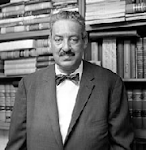
She took her case all the way to the U.S. Supreme Court and won. On this day, June 3, 1946, the U.S. Supreme Court declared segregated busing during interstate travel to be unconstitutional and set a strong precedent for future dispensation of discriminatory cases with respect to travel. The NAACP lawyer who argued her case before that august body? A young Thurgood Marshall, the same Thurgood Marshall who would later be appointed to that court.

But it was Ms. Morgan Kikaldy's courage to take her case to court, to keep the faith and to continue the battle that was the catalyst in bringing in the new law and that spurred the "Freedom Rides," an organized effort to test the new law. One of the leaders of the freedom Rides was Bayard Rustin, who was an organizer for a group called The Journey of Reconciliation at the time but would later become an adviser to Dr. Martin Luther King Jr. and the chief organizer of the march on Washington.

Speaking of Ms. Morgan Kikaldy's efforts that started it all, Raymond Arsenault, author of "Freedom Riders," wrote: “She was young, attractive, articulate and, judging by her poised performance in Saluda, strong enough to withstand the pressures of a high-profile legal battle."


As for her later life, in her fifties, she ran a child-care center with her second husband, Stanley Kirkaldy. And she went back to school. At age 68, she received a bachelor's degree from St. John's University. Five years later, she received a master's in Urban Studies from Queens College. In 2000, Glouchester County, where she got on the Greyhound bus and began her remarkable ride with history, honored her on its 350th anniversary. In 2001, President Bill Clinton awarded her the Presidential Citizens Medal, the second highest honor that could be bestowed on an American citizen. The citation read:

“When Irene Morgan boarded a bus for Baltimore in the summer of 1944, she took the first step on a journey that would change America forever.”

Do you know her? If not, maybe you should, because you don't have to ride Jim Crow either. Thank you, Ms. Irene.

Sunday, June 1, 2008

Another Time, Another Man of Hope

A friend of man said he saw a story about Bobby Kennedy on tv this morning. He said that the program mentioned that this was the 40th anniversary of Bobby's campaign and assassination, that he had seen my post comparing Bobby and Barack, and that I should post it again for those who didn't see it. Here you go, Howard.
--------------
Yes, a tall, skinny guy with a funny name is running for president of the United States.

Yes, he appeals to loyal blacks, Latinos, idealistic youth, liberals, progressives, committed
unions, and thinking independents. And, yes, when he speaks, those within earshot of him begin to clap hands, stump their feet and chant to the top of their lungs. And, when the tall skinny kid begins to weave a tale of patriotism, hard work, hopes and dreams, when his voice rises to a crescendo like a Lucian Pavarotti aria ending in the high C's, young girls in pretty dresses jump out of their seats and begin to dance deliriously, spinning like couples at a Saturday night hoedown in rural Tennessee.

"We can hope once we realize we have more in common than we have apart. We can change once we know that we have the true power: that power comes not from the top but from the ground up. We can take back White House and take back the country once we know that true power comes from us. When you say, "Yes, we can! Yes, we can! Yes, we can!"


But back in the day, another young US senator ran for president of the United States. No, he wasn't especially tall, and he didn't have a funny name. But, like the skinny kid, he had above-average intelligence, a calming effect upon everyone he met, and an absolutely disarming smile. He was the charmer.

Like the tall, skinny kid, the charmer believed in change-- change in terms of getting out of a war into which we never should have gotten involved in the first place, and change in developing a mindset where we only go to war as a last resort. Whereas the skinny kid wants to get out of Iraq, the charmer wanted to end our invasion and occupation of Vietnam. Like the skinny kid, the charmer wanted to take funding used to purchase planes and guns and to burn down villages and redirect those monies toward rebuilding America: improving education, putting Americans back to work, improving its neglected infrastructure...healing its racial wounds.

The charmer viewed our propensity for war as going far beyond politics or greed. On Face the Nation, November 26, 1967, he clearly framed our illegal occupation in Vietnam as a moral issue:

"Do we have the right here in the United States to say that we’re going to kill tens of thousands, make millions of people, as we have, refugees, kill women and children, as we have? I very seriously question whether we have that right...When we use napalm, when a village is destroyed and civilians are killed, this is a moral obligation and a moral responsibility for us here in the United States." (
The Last Campaign, by Thurston Clarke).

Like the tall skinny kid, the charmer saw past religion, race, gender and class to a promising and prosperous future for America. "For the fortunate among us, there is the temptation to follow the easy and familiar paths of personal ambition and financial success so grandly spread before those who enjoy the privilege of education. But that is not the road history has marked for us. The future does not belong to those who are content with today, apathetic toward common problems and their fellow man alike. Rather it will belong to those who can blend vision, reason and courage in a personal commitment to the ideals and great enterprises of American society."


In his own way, the young charmer was agreeing with the skinny kid: "Yes, we can! Yes, we can!

But they say all good things must come to an end. The charmer was assassinated in 1968. Still, if the charmer were around today, he would say to the tall skinny kid the same thing that his brother, Senator Ted Kennedy, said: "Well done, my son. Well done."