TALK TO THE DADDY

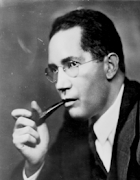
Hello. Come on in. The daddy writes about current events, literature, music and, once in a while, drops something on you from back in the day to make you pause and ponder, stop and stare, and begin to wonder. Who knows? You may start to pace the floor, shake your head from side to side, then fall down on bended knees in a praying position and cry, "Lawd, have mercy! What is this world coming to?" Check yourself! But this blog is NOT about the daddy. It's about you: your boos, your fam, your hood, your country...our hopes and dreams of a better tomorrow. So let's make a pact: the daddy will put it on the track if you'll chase it down and hit him back. Together, we can definitely take it to another level. Shall we?"

Monday, December 22, 2008

The Software got the daddy down but not out!

What's this? the daddy feeling under attack?

What's this? the daddy feeling he's been shadowed by some drunken but loyal KGB spy?

What's this? The daddy feeling he's been punched to the ropes by some brute called a man, called a boxer, looking ready to go down with the count?

Yes, folks, that's the way the daddy feels as he fights with the software he uses to blog. That's why you haven't seen photos with his post. That's why you haven't seen new photos on his sidebar (except for the Honest Scrap Award). But the situation is worse. The daddy has written 264 posts, and, with the configuration of the software, the daddy can only find 7. So the daddy is operating against time to not only repair the software to do good posts. He is trying to save what he has written for posterity.

Just know the daddy may not post for the next few days. But don't you worry. Hey, a brotha still got some spring in his feet and a right cross-left hook combination that he's getting ready to throw.

Ever had problems with your computer that kept you from posting or writing to friends?

Sunday, December 21, 2008

"Swing Low, Sweet Chariot

Today, the daddy is listening to gospels and spirituals. He's pushing the repeat button for "Swing Low, Sweet Chariot," which was written by Wallace Willis. According to the African Registry, December 21st is the date that the song was registered for the whole to know and hear. Here is the story:

December 21
*On this date in 1840, The Registry celebrates the writing of the hymn “Swing Low Sweet Chariot.”

It was penned by Wallace Willis, the black slave of a Choctaw Indian. Known as ''Uncle Wallace,’’ his writing of this well known American hymn was inspired by his current home near Oklahoma City. Willis was also a servant at Spencer Academy, a Choctaw boarding school for boys in Choctaw County. On the day he wrote the hymn, Willis looked out over the cotton field he was tilling and gazed upon the Red River in the distance. This reminded him of the Mississippi River and the plantation his master owned before moving to Doaksville, Oklahoma Indian Territory.

With the sun bright that hot day, Wallace expressed his longing and weariness the only way he knew how. Willis and his wife, Minerva, often sang Willis's songs for the students, teachers, and guests of Spencer Academy. A missionary took Willis's song to the East where it was quickly picked up by university choirs. The spiritual was composed in a Capella and was an early hallmark in black Oklahoma's contribution to popular music and culture.

Reference:
Story behind spiritual ‘Swing Chariot' emerges

Saturday, December 20, 2008

The Honest Scrap Award

Today, the daddy is smiling. Why? Because he has received another one, The
the Honest Scrap Award. This award is about bloggers who post from their heart,
who oftentimes put their heart on display as they write from the depths of their soul. I am honored to be viewed as one of those writers by Revvy Reb, who graciously and generously passed on this award to me. Revvy Reb, I thank you.

There are some simple rules to accept this award:
1. List 10 honest things about yourself, hopefully interesting.
2. Pass the award on to 7 bloggers.

10 Honest things about me.

1. Like my father, I feel a need to serve community, especially African American communities.
2.I love being with people but not too long. Sometimes I can't wait to go to a small family cafe with good coffee or the local bar with good beer to think and write.

3.I have not fully recovered from working for years with youth(especially gangbangers, male perpetrators and abused women. Watching several dead kids I knew lying in the street broke my heart. So did taking women who had been beaten up by their boyfriends or husbands to an emergency hospital. I can still see those battered faces behind bloody towels.

4. I believe in a creator, but I'm very suspicious of religion and churches.

5. Sometimes, I give mixed messages to my friends. When they talk, I nod my head to let them know I understand. But they sometimes take it to mean that I agree with them. Sometimes it causes confusion.

6. I am obsessed with my privacy.

7. With the help of friends, I got one of my three books published. But I fear the other two never will be.

8. Despite being a positive guy, I occasionally get sad when I think about
the losses in my life.

9. I have embarrassed my self in the worse way. I worked with a group of southeast Asian gangs. When the group was done, their families and elders held a big celebration in my honor. They blocked off the street and cooked a pig whole with the head on it right in the middle of the street. And they kept bringing me food that smelled of pork. I hadn't eaten pork in about 20 years. Finally, I threw up in a plate of food a women brought to me. Time to leave that celebration!

10. I believe in love, but I don't think it believes in me.

I check out lots of blogs, but here are several that I enjoy precisely because they write so well and with honesty.

1. CurvyGurl Chronicles--http://www.curvygurlchronicles.com/
2. Ephphata--http://ephphatha3.blogspot.com/
2. From the Left--http://fromtheleft.wordpress.com/
3. Keep It Trill--http://keepittrill.blogspot.com/
4. Sagacious Hillbilly--http://sagacioushillbilly.blogspot.com/
6. The Enclave--http://enclave-lion.blogspot.com/
7. Thermophylahillbilly--http://wwwwendolbloggercom.blogspot.com/

The daddy apologies for not selecting of the more established, well-now blogs. He is a little biased to the newer ones at this point. Nonetheless, these 7 blogs stack up well with the best of them. What they do so well is speak from the heart. If you haven't already, please check them out.

Thanks, Revvy Rev.

Thursday, December 18, 2008

Warren's participation in Obama's inaugural-- The Daddy's take

Letter to Barack
DaddyBstrong.blogspot.com
The Daddy

What up, Prez? Can a brotha call you Prez?

Prez, listen up: I'm gonna chill on the niceties and break it down like Rev. Wright used to break down to you at church on the southside Chicago. I'm gonna make it plain like Malcolm used to run it to brothas on the streets of Harlem. Watch out hear it comes:

Prez, let's Face it: By including THIS homophobe on your inaugural program, you blew it. Hear me? You F....d up, okay? Yeah, yeah, yeah. The daddy knows that you're a centrist politician, that you tend toward the middle, that you want to be the president who "reaches out to all Americans." But that shouldn't include this homphobe. That shouldn't include reaching out to a well-known representative of homophobia, Rick Warren, who has joined with other homophobic ministers and organizations, black and white, to create a climate of hate against gay Americans. Many gay people still live in fear of being harmed from idiots who listen to the Warrens of America.

Okay. A little bit of perspective here. Prez, how do you think black people would feel if you "reached out" and invited the Grand Wizard of the KKK on the program? That must be how many gay people are feeling now.

Prez, let's bring it home: Some ideas, and some people who promote them, don't deserve to be reached out to. Segregation and those who advocated for it does not deserve a hearing today. It was too painful to us as a nation. Nazism does not deserve a hearing. It was too painful in America and world-wide. Homophobia does not deserve a hearing. It was-- and still is-- too painful. And a well-known proponent of homophobia like Warren, a man who equates gay "behavior" with pedephilia, who characterizes the gay "lifestyle" as "incestuous," certainly should NOT be given a forum at your inauguration, or at any other time.

When you think about it, Prez, this is about something more than politics. This is about our humanity as a nation. Why not have a rabbi or a lesbian person give the invocation? Why not focus on your supporters as much as you do with your detractors? Why not give props to the people who put you in office as those who tried to pull you down and keep you out of office? But more important, in considering what person to give the invocation, in deciding whether to include Warren, why not consider gay people's humanity?

Prez: The daddy is still behind you. And he knows that on the broader scale of things, this decision want measure one grain of sand on the mountain of time. But it will be remembered by some gay and non-gay people as the beginning of a sellout of an importance base of the democratic party and a group of folks who solidly supported you.

Yes, the daddy is still with you. But when he sees you insensitively invite this homophobe who espouses such hate for gay Americans, he wonders if your argument about reaching out to all Americans is little more than a excuse to sell out a part of your base to to get votes from another one.

On the real: Brotha, you can do better. Do better next time.

Tuesday, December 16, 2008

What will you say just before you die? What will it say about you?

Listen up: the daddy wants to ask you a question about something you probably don't want to think about: death. No, not death in general. It's about the moment you face death for the last time.

Just before you die, will you shout something like, "Give me liberty or give me death?" Okay, maybe that's too dramatic, too broad. Well, how about "Lord, please watch over my family and community, when I'm gone?" Or "Lord, thank you for helping Black folk to survive this cold new land they call America. Help us to save our soul by releasing from our heart the hatred against those who who hurt us here. And, Lord, help us to be better Americans without losing our identity as a people. Amen."

The daddy is wondering about this, because he's meditating on the John Brown's revolt (one of my heroes?), about the great Frederick Douglas agreeing with John Brown in principle but warning him that it would not work.

The daddy is thinking not so much about leaders like John Brown so much as his courageous followers, many of them slaves who decided to unite with their white brother (John Brown) to revolt, to spur the end of slavery, to step onto the stage of history and play their part in ridding our great country of slavery, odds be damned.

The daddy is wondering, "How we regular folk act, what will we say when we "come to the end of the road?"

Want a good example? Then then check this out. December 16th is the date of the hanging of two of the five men who joined John Brown's in the raid on Harper's Ferry in 1859: Shields Green and John Anthony Copeland.


According to the African American Atlas, as Copeland was led to the gallows he shouted, “I am dying for freedom. I could not die for a better cause. I would rather die than be a slave.”

What will you say before you die? What will it say about the life you lived?

Monday, December 15, 2008

Tales from Planet Bizarre: Still lying, still allowed to lie

"The press is so powerful in its image-making role, it can make a criminal look like the victim and make the victim look like the criminal. This is the irresponsible press. If you aren't careful, the newspapers will have you hating the people who are being oppressed and loving the people who are doing the oppressing."
--Malcolm X
"They who have put out the peoples eyes
reproach them of their blindness.

--John Milton, 1642

Today, the daddy is feeling Michael Green, Associat Professor at Hofstra
University. He says it's a shame the way the American corporate media allowed the Bush administration to suckered them into being cheerleaders of a pre- emptive and illegal war in Iraq. Check this out:


Planet of the bizarre, episode 473:
Still lying, still allowed to lie

by Michael Green

I’m sorry, but there are moments when I just feel like a total alien who stumbled onto some planet full of bizarre life forms. They call this place America, and it sure is weird. And, lemme tell ya, I know what I’m talking about here. I’ve visited some pretty weird places in this part of the union.

You might think that a president who is widely known for lying, who leads a party also known for the same, who is at the end of his term and virtually without any punitive power worth speaking of, and who is widely despised at home and abroad – you might think such a president would get a serious grilling when sitting down with the American media for an exit interview. And, even if that might seem like a giant leap for some, perhaps you’d at least be surprised if such an individual was allowed to continue to tell revisionist historical lies without being called to account in the slightest for doing so.

Yeah, well, different galaxy, I guess. On Planet America it seems a lot more like it’s still 2002, and a frightened, compliant press is still learning how to embarrass itself by becoming a tool of a massively deceitful White House. Now that it’s almost 2009, they’ve got it down to a science. Only today they don’t even have the pathetic and shamefully flimsy excuse they did back then, in the wake of the 9/11 scare.

So here’s what happens when one of America’s most prominent journalists – Charles Gibson – sits down to interview George W. Bush. Bush, of course isn’t doing the interview because he can’t think of what else to do with himself anymore (although if you ask him what comes next after January 20, that’s pretty much exactly what it looks like). He isn’t just killing time, waiting for Cheney to dream up some other target for the administration’s predatory instincts. He’s got an agenda, which is why he’s been granting a plethora of (safe) interviews lately. And that agenda is to write the first draft of history. Just like Jackie did her Camelot rap, successfully constructing the frame through which the Kennedy administration would long be seen, so a ham-fisted Burt and Ernie – er, sorry, George and Laura – are running around trying to rehabilitate, for the sake of history, the worst presidency ever.

According to the Washington Post, this is the implementation of a strategy put together at a White House meeting two months ago, where it was decided that administration officials should reiterate key talking points in their speeches and interviews. Per a memo obtained by the LA Times, those include pointing out that the president “‘kept the American people safe' after the September 11 terrorist attacks, lifted the economy after 2001 through tax cuts, curbed AIDS in Africa and maintained 'the honor and the dignity of his office’”. That’s a cute list, isn’t it? In a certain nausea-inducing way. I don’t even know where to get started with that, and it’s probably better for all of us if I don’t. One thing I do have to say, though. Just as in our movie rating system, what passes as the standard for honor and dignity in the White House is so very America. You can murder in cold blood as many hundreds of thousands of Iraqis as you need to to get your rocks off, and that’s fine. But if you actually do get your rocks off – literally, the old-fashioned way – you’re considered obscene. Go figure, eh? Like I said, it’s a wacky little planet.

Of course, George W. Bush trying to save his legacy is not, in and of itself, so outlandish. A politician who doesn’t spin is like a conservative who doesn’t lie. It does happen. It has actually been observed in nature. Just not that often. The outlandish part is, first, the magnitude of the tales being told and sold. And, second, that a still obscenely compliant media allows these to be promulgated, without challenge, completely disregarding any notion of fulfilling a public service mandate to actually inform the people, let alone to hold the country’s leaders accountable. What a concept, eh – a critical media and governmental accountability? I guess all that hardball stuff is only for Democrats.

For the full story, click here.

Friday, December 12, 2008

Cadillac Records, Muddy Waters and Little Walter

Because the daddy has posted on the blues, his readers has asked him to review the movie Cadillac Records, give his analysis of the relationship between Muddy Waters and Little Walter and, oh yeah, say something about Beyonce.

Well, the daddy has heard so many rumors about Little Walter's death that he distrusts the movie industry to read, talk to the old timers who were there, and objectively ferret out fact from fiction. Also, the daddy knows from experience as a reporter that to get black family members to talk to white reporters or strangers about musicians or artists is very difficult, if not impossible. Therefore, the daddy doubts if he'll see the movie. He thinks the movie will be good entertainment but reveal little in terms of new facts and, in fact, will probably enable vicious rumors or sincere inaccuracies. But the daddy will make the following suggestion:

1.If you want entertainment, go see Cadillac Records. However, recognize
it as entertainment, not facts.
2. If you're looking for probably more accurate version of the relationship betweem Muddy and Walter, read a biography of Little Walter called "Blues with a Feeling" by Glover. It's the best research onf Walter's life that I've found.
3. If you can't find the book at the bookstore, order it online. Make it your Christmas present.
4. Until then, read the two articles written here at daddyBstrong.

When you finsih, Holla at the daddy and let him know what you think.

Little Walter and them blues with a feeling, PT I
by Mac Walton, aka, the daddy
8,16 2008

Have you heard a song called "Juke?"

Have you heard a tune called “Blues with a feeling?”

Have you ever heard of a guy named Little Walter?

Maybe. Maybe not, but you’ve heard him. If you've ever heard slide guitarist Hound Dog Taylor sing “I held my baby,” where he sings a blues line then slides a small pipe high up on the fretboard of his guitar, making it cry like a new-born babe, you’ve heard Little Walter. If you’ve ever heard Albert King sing “As the years go passing by,” heard him bend his guitar strings across notes and up to the high heavens, making his Lucy soar to the high C's and keeping her there, like Pavarotti at the end of an aria at an opera house in Rome or Aretha Franklin at a Detroit Church on Sunday, you’ve heard Little Walter.

You see, Walter
electrified the harmonica, transforming it from a back-up instrument to a solo voice, making it moan low or soar high into the stratosphere, like the greatest of instruments, making sounds the harmonica never made before. And it was Walter testified in words and sounds what many African Americans knew but couldn't quite bring themselves to say: they have them "blues with a feeling" and those blues follows them every night and every day.

Innovation

Harmonica player/guitarist, singer/songwriter Little Walter was born Marion Walter Jacobs in Marksville, Louisiana on May 1, 1930 and was raised in rural Alexandria, Louisiana. At the tender age of 12, he quit school, left rural Louisiana and traveled to highly black-populated cities like New Orleans, Memphis, Helena (that’s in Arkansa), and St. Louis to hear and play the blues. He honed his skills by playing with the great Sonny Boy Williamson I, guitarists Bill Broonzy and Honey Boy Edwards, among others.

Like many bluesmen, Little Walter made it to Chicago (in the mid-forties) and soon garnered attention for his already great skills on the harmonica. However, Walter noticed that he was being drowned out by electric guitars in the Chess music studio and blues bars around Chicago. Frustrated, he adopted a simple but hereto unknown technique of cupping a small microphone into his hands with his harmonia. Then he plugged the microphone into a guitar or public address amplifier. In this way, he could compete with the electric guitars in the Chess studio and in the black clubs around South side and West side Chicago. But Walter did more.

Creation

Walter didn't use an amplified harmonica just for volume. He used it to get a certain tone on the instrument for which he became famous. He used it to stretch long sounds across notes or to make short sounds. Put together in a slow grooving ballad, he could make the harmonica wail long and hard or cry just a little at a time, like a person whimpering or sobbing after a terrible break-up, wondering where to go next. So it was not just the innovation but the tone and sonic effects that he got on the instrument that caused such an impact in the blues world.

It was that tone and those sonic effects that caused the great blues pianist Pinetop Perkins to say that Walter might be the greatest harmonica player ever, that caused Walter and Muddy Waters drummer Sam Lay to say he KNEW Walter was the greatest ever, and that caused Junior Wells, a great harmonica player in his own right (who was mentored by Sonny Boy Williamson I) to say, “There will never be another Little Walter. Never.”

Little Walter and them blues with a feeling, Part II
by Mac Walton, aka, the daddy

Success with the Mississippi Sax

Little Walter did some recordings for himself in 1947. But things began to take off for him when he joined the Muddy Waters band in 1948. Waters was no fool. He knew a good thing when he saw it and great talent when he heard it. So Waters featured Walter’s more modern sound in his band.

In 1952, Walter recorded a little tune for Chess called “Juke.” It shot quickly to the top as #1 on Billboard magazine R&B charts. Soon, other recordings would reach the top 10 (“Off the Wall,” “Roller Coaster,” and “Sad Hours”). Walter was on his way.

He soon left Muddy Waters band and recorded a series of hits, eclipsing the success of Waters. His songs were original (He co-wrote many of them with Chess staffer Willie Dixon), more up-tempo, jazzier; and sound more modern than the Muddy-Waters-influenced sound of the day.

Death from the cold concrete of Chicago

Yes, Walter was a success. But he was also in decline. Due to his bad temper and bad management skills, he had difficulty keeping his band together. He began to drink heavily and to use other drugs. He got into fights, the last one resulting in his death. Gesturing to indicate that Walter drank alcohol and took other drugs, Muddy told writer Patrick Day, “Little Walter was dead 10 years before his death.”

On the surface, he died on February 14, 1968 at the age of 37, as a result of wounds incurred in a fist fight during a break in a performance he was giving on the South side of Chicago (They said these wounds compounded other wounds he had received from other fights that helped to cause his death). On the surface, he died from a bad temper, an anger problem that caused him to drink too much, yell at band members and develop bad relations with women. But others said the problem was much more complex.

Some musicians said that Walter’s problems were tied to the decline in the sale of his music, the declining interest in blues music and the increased attention given to Rock and Roll, a blues derivative. They said that, to the extent that whites were interested in blues musicians, they sought out more “authentic” blues players—old men or women from the rural South to perform at festivals. Other musicians said this is nonsense. They said, yes, the music business was changing, but that was no excuse for his bad temper. Besides, they said, fellow Chicago bluesmen Muddy Waters, Howlin Wolf and Buddy Guy did just fine.

Perhaps there was another reason for Walter’s downfall: what he was, an artist. As an artist, deeply involved with the public, and as a black artist (singer, harmonica player, guitarist and songwriter), he had to be keenly aware of what Chicago was: a city where he and other blacks faced the same problems that he had experienced in the cities in the South where he had traveled (New Orleans, Helena, St. Louis, etc.) —cities where things were in some ways different but, ultimately, the same: cities where you work hard for little pay (if you can find a job), get beaten down by job and other forms of institutional discrimination; get assaulted by police, get exploited by absentee landlords who won’t fix a damn thing, get ripped off by grocery store owners who charge high prices for spoiled food, get attacked by thugs who live or hang around crime-ridden, gang-infested public housing, get mis-educated and made to feel inferior by public schools and get angered by the overall white attitude that black people are inferior and deserve what they get (poverty and racism).

A well traveled and highly aware Little Walter had to know that it was not just a black woman but white Chicago, indeed white America, that gave him them “blues with a feeling.”

Footprints

Despite his untimely death, the huge footprints Walter left on the blues road cannot be overstated. His song “Juke” was selected as one of the top 500 songs that shaped Rock and Roll. He was inducted into the R&B and Grammy Hall of Fame.

Of course he was the greatest harmonica player that Muddy Water’s ever had in his band. But it should be remembered that he influenced all harmonica players. So when you hear the great harmonica players that once graced Muddy Water’s band (Junior Wells, James Cotton, Carey Bell and others), you’re hearing Little Walter. When you hear some of the better harmonica players like Charlie Musselwhite, William Clarke, Paul Butterfield or John Poppers (He’s with the group Blues Traveler), you’re hearing in sound and approach Little Walter. In fact, it could be argued that it was Little Walter who was chiefly responsible for what we now call the Chicago Blues sound, or the Chicago Blues. Such was his influence on modern blues.

A very good passage from “Blues with a Feeling,” perhaps the definitive biography of Little Walter, may have said it best: “Influenced as much by horn players as other harmonica players, as much by jazz as was by blues, Little Walter freed the harmonica of {its} customary, if self-imposed, restriction for the first time.”

Have you ever had them blues with a feeling, blues that kept following you around? Then pick up a Little Walter's CD. He understood. The blues followed him every night and every day.