TALK TO THE DADDY

Hello. Come on in. The daddy writes about current events, literature, music and, once in a while, drops something on you from back in the day to make you pause and ponder, stop and stare, and begin to wonder. Who knows? You may start to pace the floor, shake your head from side to side, then fall down on bended knees in a praying position and cry, "Lawd, have mercy! What is this world coming to?" Check yourself! But this blog is NOT about the daddy. It's about you: your boos, your fam, your hood, your country...our hopes and dreams of a better tomorrow. So let's make a pact: the daddy will put it on the track if you'll chase it down and hit him back. Together, we can definitely take it to another level. Shall we?"

Thursday, July 17, 2008

I Ponder the Cost by Rainywalker

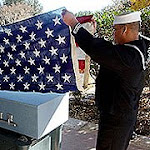
On, Memorial Day, the daddy made a promise. It went like this: "The daddy will remember our soldiers-- the standing and fallen-- on Memorial Day, everyday."

He said we should get out of Iraq because:


  • The US invasion and occupation was unnecessary;
  • It killed hundreds of thousands of Iraqis and caused even more to be displaced in other countries;
  • It caused deeper divisions among ethnic groups;
  • It caused the death of more than 4,000 US soldiers and psychologically damaged thousands more, perhaps for life;
  • It distracted us from capturing the number one terrorist (Osama Bin Laden) and his crazies (Al Queda) in Afghanistan, near the Pakistani border, and is serving as a recruiting tool for Al Queda;
  • It reconfigured power politics of the Middle East, transferring power from the US to Iran;
  • It is destroying untold numbers of US military families (something folks seemed to have forgotten on Memorial Day); and
  • It transferred to Iraq and Afghanistan financial and human resources needed to provide healthcare, jobs, education, affordable housing and greater safety at home; and
  • Iraqis don't want us there. Even the corrupt, hand-picked government that we put in power want a timetable for our withdrawal.
To honor his promise, the daddy will be doing posts related to the Iraqi war and our brave but poorly (civilian) led soldiers.

Tonight, I'm feeling this poem by Rainywalker.
-------------------------------------------------------

I Ponder the Cost

I was not in the Revolutionary War, or at Valley Forge on that cold winter.

I was not with the patriots on their way to Trenton to fight the Hessian's.

I was not there when they sang "Yankee Doodle Dandy."

I have never been to Cornwallis's Yorktown.

But I ponder the cost!

I was not in the War of 1812 and watched "the bombs bursting in air."
I was not with Francis Scott Key when he wrote the "Star Spangled banner."
I was not there to see the British enslave our men at sea.
I was not there to watch the Executive Mansion when it burned.
But I ponder the cost!

I was not in the American Civil War and watched brother against brother.
I was not with the federals at Gettysburg to watch the cannon charge.
I was not with McClellan at Antietam as both sides lost 4710 dead, 18440 wounded and 3043 missing.
I was not at Appomattox Courthouse when General Lee turned in his sword.
But I ponder the cost!

I was not in WWI and mustard gassed on the battlefield.
I was not at the battle of the Argonne.
I was not in the stalemated trenches of death.
I have never visited Verdun.
But I ponder the cost!

I was not in WWII and on the beaches of Normandy.
I was not there when Berlin fell to the Allies and Hitler died.
I was not in a sub lost off the north Atlantic coast.
I have never visited IWO Jima.
But I ponder the cost!

I was not in Korea at In-Chon to feel the cold, cold winter.
I was not with the American White Tigers in North Korea.
I was not in South Korea when the priests were nailed to trees in the streets.
I have never been to Pork Chop Hill.
But I ponder the cost!

I was in Vietnam, with the woman dressed in black.
I was not at Khe Sanh knee deep in blood.
I was not at Hamburger Hill.
I have never seen the craters in Hanoi.
But I ponder the cost!

I was not in Desert Storm, as the sand coughed up death.
I was not on an F-117 as it dropped it's bombs.
I was not with the Allied soldiers when they took back Kuwait.
I have never been on the ground where the lighting charge occurred.
But I ponder the cost!

I was not in Iraqi Freedom and seen the Baghdad city limits.
I was not with the chemical war specialists when they searched for WMD.
I was not there when Saddam Hussein was captured.
I have never been to Aba Graube prison where the Spooks committed murder.
But I ponder the cost!

I will not be there at future battles amongst the stars.
Nor watch as the war machines stir up dust on the moon.
Nor watch as the International Space Station stops spinning.
Nor watch as blood runs across the face of Mars.
But I will ponder the cost!

I was with them in only one of their struggles.
And with a simple symbol of stars and strips forever.
I ponder the cost!

Wednesday, July 16, 2008

A Master Poet, Rita Dove Blends Dance and History: A Book Review

"In recent years writers such as Toni Morrison, Rita Dove and Philip Roth have all included African American World War I veterans in their work; even the 2005 remake of King Kong added in a black former Great War sergeant. The Great War experiences of African American soldiers in 1917 and 1918 did have a thorough and long-lasting effect on African American culture; they made it more alive to cosmopolitan exchanges, provided models of manhood for the next
generation, and raised important questions
about the relation of black Americans to national history and memorial. Du Bois’s soldiers of democracy’ may not have won the fight against racial injustice in the USA, but they left a powerful legacy to an African American culture which played such a crucial role in that fight in the years to come."
--Dr. Mark Whalin


Add to your list of master poets the name of Rita Dove, the first African American poet laureate of the United States (1993 and 1995), author of twelves books of poetry, and professor of English at the University of Virginia, the house that Thomas Jefferson built.

Today, the daddy's feeling Rita's American Smooth, Dove’s more recent work. In this work, she speaks of African Americans surviving, dancing around ballrooms and through minefields of racial bigotry with style and grace: The freedom and exhilaration one feels twirling around the dance floor; the stir a black woman causes when she enters a room (that grand entrance!); Hattie McDaniel's arrival at the Coconut Grove; the determined dignity of the Billie Holidays. But what attracted the daddy were the poems under the title “Not Welcome Here.” These are poems about black soldiers from World War I and World War II and their treatment by an “impertinent nation” once they returned home. Dove lets the black soldier speak:

You didn't want us when we left
but we went.
You didn't want us coming back
but here we are.


In "Alfonzo Prepares To Go Over The Top," Dove puts us on the front lines, showing
us war in all of its horror ("moves ass and balls, over tearing twigs and crushed
faces") and a soldier's life ("hear the le
aves? I am already memory") as pawn
in
a bigger game and temporary at best:


Alfonzo Prepares To Go Over The Top

A soldier waits until he's called- then
moves ass and balls, over
tearing twigs and crushed faces,
swinging his bayonet like a pitchfork
and thinking anything's better
than a trench, ratshit
and the tender hairs of chickweed.
A soldier is smoke
waiting for wind: he's a long corridor
clanging to the back of a house
where a child sings
in its ruined nursery...
and beauty is the
gleam of my eye on this gunstock and my spit
drying on the blade of this knife
before it warms itself in the gut of a kraut.
Mother, forgive me. Hear the leaves? I am
already memory.
In Bill Moyer's The Language of Life, Dove said of poetry:

"By making us stop for a moment, poetry gives us the opportunity to think about ourselves
on this planet and what we mean to each other...Equally important is the connection poetry
emphasizes of human being to human being: What are we doing to make everyone's lives
better, and not materially, but spiritually as well? I think that why poetry has often been
considered dangerous."

Rita Dove: Thank you.

Tuesday, July 15, 2008

Come on, Bill!!!-- An Open Letter to Bill Cosby

“If nothing else, Cosby’s ventures into the realm of social criticism prove the non-transferability of genius...it is probably best that [Cosby] explore his gifts for comedy and leave the social analysis and race leadership to those better suited to the task.”
--Michael Eric Dyson, author of Is Bill Cosby Right?

Dear Bill:


Hearing you preach to the black poor makes me want to do some preaching of my own-- to you.


1. I love you, Bill, but I'm sick of your file-mouthed, despicable talking points which could have very well come out of the mouths of white racists going back at least as far as American eugenicists and Hitler in the 1930's.

2. Understand, Bill: Cultural analyses (even if valid on occasions) without so much as a nod to their more important structural underpinnings are incomplete at best, and at worse, egregious, especially where race is concerned, because they do little more than blame victims and enable racists.

3. Face facts, Bill: You are a learned African American but an old man who steadfastly refuses to indict white America, even the sorry Bush Administration, for enriching multi-national corporations at working people's expense (corporate welfare). In your haste to bash the black poor by measuring all black women by sisters in projects and all black boys by gangbangers, you fail to demand that the US government repair structural deficiences in welfare policies to help families stay together, provide greater funding so poor and working people can go to college, pass universal health care so people will be able to look for work and go to work, develop tougher penalties for businesses that discriminate against qualified applicants, regardless of ethnicity, gender or sexual orientation.

4. And do some reading of your own, Bill. Check out New York city's 2004 study which showed that the reason for high levels of black unemployment in that city was not because blacks didn't want to work but because much of manufacturing jobs had left the city and because white businesses refused to hire blacks, especially black men. Hence 49% black unemployment in New York City. You think white businesses in other metropolitan cities aren’t doing the same thing, Bill?

5. Get your head out of the clouds and come into the 21st century. Understand that this is not the economy of the 50's but a global economy where US corporations are investing overseas where labor costs are low and unions don't exist. Read up on General Motors; and you’ll see they’re closing U.S. plants, abandoning American workers and going to China.

Don't you get it, Bill: multi-national corporations not only don't want to hire black males, they don't want to hire white males either. They want to hire workers in China, India, Pakistan and Mexico to work in plant platforms that they've already built, to make the products so they can ship them to the US to outlets like Wal-Mart and Target to sell to the same people that they refuse to hire, or whose job they've shipped overseas.

In between your favorite comedy routine of bashing black women and children on white tv programs like Meet the Press, please say something about changing tax laws and agreements like NAFTA that's causing all types of Americans to lose jobs.

But your refusal to look at today’s economy is not your worse mistake. You’re worse mistake is preaching to the black poor in harsh language, shaming them as much as possible. Throughout your book, you use words like stupid, ignorant, shameless, "these people" and pathetic. Know what’s pathetic, Bill? Attempting to educate by shaming. Your contempt for the black poor is transparent.

Now how does that make you feel...? Good! Remember that the next time you try to preach to black folk.
--------------

For other perspectives, see James Davidson. Also Lawrence Hill.

Sunday, July 13, 2008

Poetry You Should Know: I, Too, Sing America

During this historic presidential election year, I'm feeling this poem that was sent to me by Tami over at whattamisaid.
"Hold fast to dreams, for if dreams die, life is a broken winged bird that cannot fly."
--Langston Hughes

This week's poet is Langston Hughes.

I, Too

I, too, sing America

I am the darker brother.
They send me to eat in the kitchen
When company comes,
But I laugh,
And eat well,
And grow strong.

Tomorrow,
I'll be at the table
When company comes.
Nobody'll dare
Say to me,
"Eat in the kitchen,"
Then.

Besides,
They'll see how beautiful I am
And be ashamed--

I, too, am America.
--------------------
Note: Tami says she intends to spotlight a new poet each week. Thanks, Tami.

Saturday, July 12, 2008

Rev. Jackson And Obama's Call for Black Male Responsibility

"See, Barack's been talking down to black people on this faith-based. I wanna cut his (EXPLETIVE DELETED) off. Barack, he's talking down to black people." --Rev. Jessie Jackson, whispering to another black male at Fox News studio.

"He will continue to speak out about our responsibilities to ourselves and each other, and he of course accepts Rev. Jackson's apology."
--Obama campaign spokesman Bill Burton said.

Recently, Mel Reeves, a fine freelance writer and former editor of the Spokesman Recorder, a black weekly in Minneapolis, Minnesota, wrote a an article for Liberator Magazine called "Wait a Minute…Jesse Jackson." The article rightly criticizes Rev. jessie Jackson for his crude criticism of Sen. Obama (at a Fox News studio, no less). But beyond the crude language, Mel focuses on the main point that Rev.Jackson made: that, instead of preaching to black people, so to speak, Obama should be talking about programs to improve the conditions of blacks in the inner-cities.

The daddy likes Mel's writing and his progressive views. But he has a different take on Rev. Jackson.

First, putting aside the crude comments for the moment, Mel is right: Obama does owe a great debt to Rev. Jackson and other organizers and lieutenants in Dr. Martin Luther King's Southern Leadership Conference (SCLC) who spearheaded a successful victory in defeating apartheid in the southern part of the United States and socially pushed the rest of America forward in race relations. And, although he used it as a vehicle for his own ascension to power, Rev. Jackson deserves further credit for continuing Dr. King's fight to go beyond civil rights and fight against poverty through his Rainbow Coalition.

But in case you didn't notice, Rev. Jackson, Sen. Obama has spoken eloquently about his admiration of Rev. Jackson, the immensely victorious civil rights movement and those who fought, even died to make it so. And he made it clear that he was standing on the broad shoulders of those who came before him.

He did this on numerous occasions in the primary. Recently, in the general election, Obama has understandably played down the the civil rights struggle to introduce himself, his family and his policies to all American voters, i.e. beating ring-wing Republicans attempt to define him as a far left tax spender who has an angry black wife whose patriotism is questionable, who attended a Muslim school as a child and who is, secretly, a Muslim who would give aid and comfort to Middle Eastern terrorists (Now put your hand over your mouth and shout, "Oh my God!!!"). Instead of being defined by others, he is defining himself, something John Kerry failed to do. In fact, you may recall that Republicans were quite successful in defining Kerry as a flip flopper and as a soldier who may not have been worthy of all those metals he won fighting in Vietnam. Remember Swiftboaters for Truth?

In case you didn't notice, Rev. Jackson, Obama is speaking in good detail about policies which transcend race and affect all Americans, especially black and poor Americans. The financial crisis may have been fostered by white financial bankers and mortgage companies holding hands to stick it to middle and low income homebuyers. And, yes, that crop of sorry, pro-corporate Bush administration cronies were white, and, yes, they turned their heads as the economy went to hell. But this financial crisis affects all Americans. Obama may not be emphasize this in black churches, but black churchgoers and non-churchgoers, like the rest of America, know its importance-- know it's about their future ability to stay in their homes, to live in the community they love, the community near their children's school. And they know their home is about their wealth; and they know that, if their home is taken, their wealth is taken, meaning that, financially, they will have nothing left. So, for Rev. Jackson to suggest that Obama is not developing programs to help black people is a cheap shot, and he knows it.

Rev. Jackson reads. He knows, for example, that Obama's support of Sen. Christopher Dodd's program to reform sub-prime mortgages and to keep those families in their homes will help black Americans. He knows that Obama's proposal to reform the present pro-business bankruptcy laws and his promise to increase funding (up to $4,000 per student, as I understand it) so kids can go to college will help black families as well.

But the question of strong black families and how we're going to develop more of them gets to the nitty-gritty of it all. I mean, can you imagine Rev. Jackson, or any minister, criticizing obama for calling on the black community to be moral? For exhorting black males to be men: to be more nurturing fathers, more loving husbands and more responsible citizens? Yes, we could always use more programs, especially youth programs in the inner-city. But as much as it is kept secret, we have lots of programs in the inner-city run by committed black men, women of color, even white people, that a lot of kids, especially black and Latino kids, refuse to access. They're too busy playing gangsta: listening to gangsta rap, pushing drugs, selling guns, buying guns, going in and out of prisons to increase their street cred, busting into houses, beating up men and gang raping women, and getting teenage girls pregnant-- girls who have bought into the gangsta-thug image. Now, Jessie, minister, don't you think a community that has black men, or men of any ethnic group, doing these things, could use some serious talk about morality?

Second, Jessie: With the crudity of your language and the anger in your voice, even Stevie Wonder with dredlocks covering his eyes can see that you're jealous of 0bama. Instead of seeing his run for the presidency as a historical outcome of a social revolution that successfully defeated apartheid in the southern part of the United States and that set America on a course of positive change in race relations, you see him as a young upstart who didn't march at Selma yet eclipsed you in your run to be president, something you wanted more than anyone else will ever know. Jessie, it wasn't your time. That's all. Case closed. Besides, since when is life fair? So, in the words of my tagging, hip-hopping, text-messaging nephew, "Don't be hatin'!"

Yes, Rev. Jackson, you've made a great contribution to our struggle. Now we need you to chill on the ego and join with Sen. Obama and other black men and women, people of color, and progressive of all strips to send a clear message to our young men and women that violence and immorality in our communities will not be tolerated.

As for your less than statesman-like support of Obama's well-run, historic campaign for the U.S. presidency, ask yourself: Would your behavior have made Dr. King proud?

Thursday, July 10, 2008

Can You Still Hear America Singing?

I Hear America Singing

I hear America singing, the varied carols I hear,
Those of mechanics, each one singing his as it should be
blithe and strong,
The carpenter singing his as he measures his plank or beam,
The mason singing his as he makes ready for work, or
leaves of work,
The boatman singing what belongs to him in his boat, the
deckhand singing on the steamboat deck,
The shoemaker singing as he sits on his bench, the hatter
singing as he stands,
The wood-cutter’s song, the ploughboy’s on his way in the
morning, or at noon intermission or a sundown,
The delicious singing of the mother, or of the young wife
at work, or of the girl sewing or washing,
Each singing what belongs to him or her and to none else,
The day what belongs to the day- at night the party of
young fellows, robust, friendly,
Singing with open mouths their strong melodious songs.
-- from "Leaves of Grass" by Walt Whitman

In the past few posts, we spoke of poetry as truth, of poets using poetry not only to document reality but to make us feel reality at the core of our being so that, hopefully, we will remember it. We gave examples of such poetry by highlighting the poetry of Sterling A. Brown, Robert Hayden, Gwendolyn Brooks, Margaret Walker and Wanda Coleman.

With this post, the daddy concludes this poetry series, but he will still post on poetry from time to time. Meanwhile, he asks that you drink from the cup of poetry because, in the words of Rumi:

"The cup wants to be lifted and
used, not broken, but carried

carefully to the next. The cup
knows there is a state for you.

Beyond this, one that comes with
more vast awareness...”

The daddy asks that you remember, with feeling, the insightful poems and the great poets who labor long after midnight to fill your cup in the morning, to connect with you at what Rumi calls “the deep root of your being, the presence of your lord” so that you will not be “wasting valuable keenness and forgetting your dignity and purpose.”

And, like Whitman, the daddy is asking, can you still hear America singing?

Wednesday, July 9, 2008

Two Poems from the Daddy

“It was intended that you should perish in the ghetto. Perish by never being allowed to go behind the white man’s definitions, by never being allowed to spell your name, your proper name.”
-- from The Fire Next
Time by James Baldwin

Historical note: Emmett Louis Till was a 14 year old African American boy from Chicago who was visiting relatives in Mississippi. He allegedly spoke to a white woman in a general store. For this alleged behavior, he was taken from his bed at night, beaten, shot and dumped in the Tallahatchie River. An all-white jury found the men who did this innocent. His courageous mother publicized the murder, insisting on an open coffin at his funeral so the world could see the horrific brutality he suffered. His murder galvanized the country and gave Americans the courage to march against segregation. Emmett was not forgotten.

Emmett Till
by MacDaddy

Black male, curious youth,
Galvanizer of a movement to reclaim humanity,
Sometimes, when I walk along the banks of the Mississippi,
I can still see your fist push above water, making
Waves still.

I can still see your skinny brown frame rise above water, your
Right arm jump
at me then slowly, slowly
Ease back
into the river, become one with the fog, those
Deep-set eyes fixed, that muscled right hand clenched, descending
Beneath the waters, crying
I'll never let you forget
------------------------------------------


The daddy wrote “Survival” as a testament to African American’s long struggle for liberation in the United States. It speaks to his pride in his people and his recognition of the fact that he sits proudly on the shoulders of those who came before him.

Survival
by MacDaddy

We are like flowers on the banks of Mount St. Helens
Always near the crest of outburst, the jutting fire
The smoldering flame

Scalded with heat, covered with ash, abandoned
To wither with the frying dead again
And again.

Still---

We rise, recollect and return to green next spring
We rise; even bloom here and there

We rise, moist petals with deep roots

Still---

We rise. A sun people fresh grown
To breathe clear air. We rise.

We will always rise.