TALK TO THE DADDY

Hello. Come on in. The daddy writes about current events, literature, music and, once in a while, drops something on you from back in the day to make you pause and ponder, stop and stare, and begin to wonder. Who knows? You may start to pace the floor, shake your head from side to side, then fall down on bended knees in a praying position and cry, "Lawd, have mercy! What is this world coming to?" Check yourself! But this blog is NOT about the daddy. It's about you: your boos, your fam, your hood, your country...our hopes and dreams of a better tomorrow. So let's make a pact: the daddy will put it on the track if you'll chase it down and hit him back. Together, we can definitely take it to another level. Shall we?"

Showing posts with label Sojojrner's Place (http://sojournersplace.blogspot.com/). Show all posts

Sunday, April 19, 2009

The shame of the military: harassment, assaults, rapes, and murder to cover it up

Listen up. This is serious, as serious as serious gets. This is hot, rapid-fire stress atop the harrowing, heart-pounding frenzy of war.

These are words that shoot to the heart and remain as a deep, painful wound over a lifetime. These are taunts; This is intimidation; These are sexual assaults; these are attempted rapes; These are rapes; and these are murders to cover up assaults and rapes by "good ole boys" masquerading as men, by fellow soldiers turned monsters, knowing that hurting, maiming, even killing our mothers, sisters and daughters probably will never be reported, and if so, will get them little more than a slap on the wrist. This is the shame of the U.S. military.

The daddy was over at the blog The Intersection of Madness and Reality, where brotha Rippa hits it with a vengeance every day. In a recent post, Rippa says he is against women serving in the military. Yeah: it sounds sexist. Yeah: in a free and democratic society, women should have the same option to serve their country as men. Like men, they should "be all they can be." Ugh huh.

Well, Rippa is against women going into the military as it is presently constituted and cultured, and so is the daddy-- and for the same reason: The way the military treats women who have been , harassed, sexually assaulted, raped or killed by our soldiers is a low-down, murdering shame. In fact, it's the shame of our military. A recent report found that 70% of women in the military are assaulted and 90% of assaults go unreported.

But here's another reason the daddy is against women going into the military: These crimes and further crimes to cover it up have been going on forever, it seems, and the military has done little to stop them. Yeah, they say they provide "sensitivity" training for men. But you know what? They don't say they are not doing the main thing they should do; prosecute to the hilt the soldiers who commit these crimes. Check it out for yourself and you'll find that, for the most part, the military brass either looks the other way or slaps these slimy, arrogant criminals on the wrist.

These guys, these criminals, know this. They know that, first, the crime will probably not be reported and, second, if reported, they will get little more than a demotion or a transfer.
He doesn't know about you, but here's what the daddy is going to do:


1. Get the facts;
2. Find out who the people are on committees that are looking into these crimes;
3.Write to them;
4. Blog about them, promoting those who do something, criticizing those who continue to do nothing; and
5. Write to the Obama administration (I've written them before and they've always responded).

We can't take this sitting down. The daddy is ashamed of the U.S. military. What about you?

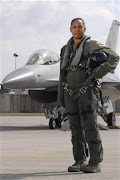
Meanwhile, here is an article from BBC news where military women speak for themselves about the horrific nature of these crimes within one of our most important institutions, women who had to fight two wars: one against men shooting bullets at them and another against "men" seeking to sexually assault or rape them.
---------------------------------------------------------------------------------

Women at war face sexual violence

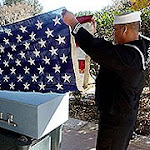
Female US soldier (file picture)
Over 206,000 US women have served in the Middle East since March 2003

In her new book, The Lonely Soldier: The Private War of Women Serving in Iraq, Helen Benedict examines the experience of female soldiers serving in the US military in Iraq and elsewhere.

Here, in an article adapted from her book, she outlines the threat of sexual violence that women face from their fellow soldiers while on the frontline, and provides testimony from three of the women she interviewed for her book.

More American women have fought and died in Iraq than in any war since World War II.

Over 206,000 have served in the Middle East since March 2003, most of them in Iraq. Some 600 have been wounded, and 104 have died.

Yet, even as their numbers increase, women soldiers are painfully alone.

In Iraq, women still only make up one in 10 troops, and because they are not evenly distributed, they often serve in a platoon with few other women or none at all.

This isolation, along with the military's traditional and deep-seated hostility towards women, can cause problems that many female soldiers find as hard to cope with as war itself - degradation and sexual persecution by their comrades, and loneliness instead of the camaraderie that every soldier depends on for comfort and survival.

Between 2006 and 2008, some 40 women who served in the Iraq War spoke to me of their experiences at war. Twenty-eight of them had been sexually harassed, assaulted or raped while serving.

They were not exceptions. According to several studies of the US military funded by the Department of Veteran Affairs, 30% of military women are raped while serving, 71% are sexually assaulted, and 90% are sexually harassed.

The Department of Defense acknowledges the problem, estimating in its 2009 annual report on sexual assault (issued last month) that some 90% of military sexual assaults are never reported.

The department claims that since 2005, its updated rape reporting options have created a "climate of confidentiality" that allows women to report without fear of being disbelieved, blamed, or punished, but the fact remains that most of the cases I describe in my book happened after the reforms of 2005.

CHANTELLE HENNEBERRY

Army specialist Chantelle Henneberry served in Iraq from 2005-6, with the 172nd Stryker Brigade out of Alaska.

I was the only female in my platoon of 50 to 60 men. I was also the youngest, 17.

Because I was the only female, men would forget in front of me and say these terrible derogatory things about women all the time.

I had to hear these things every day. I'd have to say 'Hey!' Then they'd look at me, all surprised, and say, 'Oh we don't mean you.'

I was less scared of the mortar rounds that came in every day than I was of the men who shared my food
Chantelle Henneberry

One of the guys I thought was my friend tried to rape me. Two of my sergeants wouldn't stop making passes at me.

Everybody's supposed to have a battle buddy in the army, and females are supposed to have one to go to the latrines with, or to the showers - that's so you don't get raped by one of the men on your own side.

But because I was the only female there, I didn't have a battle buddy. My battle buddy was my gun and my knife.

During my first few months in Iraq, my sergeant assaulted and harassed me so much I couldn't take it any more. So I decided to report him.

But when I turned him in, they said, 'The one common factor in all these problems is you. Don't see this as a punishment, but we're going to have you transferred.'

Then that same sergeant was promoted right away. I didn't get my promotion for six months.

They transferred me from Mosul to Rawah. There were over 1,500 men in the camp and less than 18 women, so it wasn't any better there than the first platoon I was in. I was fresh meat to the hungry men there.

I was less scared of the mortar rounds that came in every day than I was of the men who shared my food.

I never would drink late in the day, even though it was so hot, because the Port-a-Johns were so far away it was dangerous.

So I'd go for 16 hours in 140-degree heat and not drink. I just ate Skittles to keep my mouth from being too dry.

I collapsed from dehydration so often I have IV track lines from all the times they had to re-hydrate me.

MICKIELA MONTOYA

Army specialist Mickiela Montoya served in Iraq for 11 months from 2005-6, with the California National Guard. She was 19 years old.

The whole time I was in Iraq I was in a daze the whole time I was there 'cause I worked nights and I was shot at every night.

Mortars were coming in - and mortars is death! When they say only men are allowed on the front lines, that's the biggest crock of shit! I was a gunner! But when I say I was in the war, nobody listens. Nobody believes I was a soldier. And you know why? Because I'm a female.

There are only three things the guys let you be if you're a girl in the military - a bitch, a ho, or a dyke. You're a bitch if you won't sleep with them. A ho if you've even got one boyfriend. A dyke if they don't like you. So you can't win.

Mickiela Montoya (Picture Credit: Emma O'Connor)
I wasn't carrying the knife for the enemy, I was carrying it for the guys on my own side
Mickiela Montoya

A lot of the men didn't want us there. One guy told me the military sends women soldiers over to give the guys eye-candy to keep them sane.

He told me in Vietnam they had prostitutes, but they don't have those in Iraq, so they have women soldiers instead.

At the end of my shift one night, I was walking back to my trailer with this guy who was supposed to be my battle buddy when he said: 'You know, if I was to rape you right now nobody could hear you scream, nobody would see you. What would you do?'

'I'd stab you.'

'You don't have a knife,' he said to me.

'Oh yes I do.'

Actually I didn't have one, but after that, I always carried one.

I practiced how to take it out of my pocket and swing it out fast. But I wasn't carrying the knife for the enemy, I was carrying it for the guys on my own side.

MARTI RIBEIRO

Air Force Sergeant Marti Ribeiro was assaulted by a fellow serviceman while she was on duty in Afghanistan in 2006.

It's taken me more than a year to realise that it wasn't my fault, so I didn't tell anyone about it.

The military has a way of making females believe they brought this upon themselves. That's wrong.

There's an unwritten code of silence when it comes to sexual assault in the military.

But if this happened to me and nobody knew about it, I know it's happening to other females as well.

Adapted from The Lonely Soldier: The Private War of Women Serving in Iraq by Helen Benedict, just released from Beacon Press.

Thursday, April 16, 2009

June Jordan, a poet you should know

"I am a feminist, and what that means to me is much the same as the meaning of the fact that I am Black: it means that I must undertake to love myself and to respect myself as though my very life depends upon self-love and self-respect. "
--June Jordan
"As a Black poet and writer, I am proud our Black, verbally bonding system born of our struggle to avoid annihilation...and so I work, as a poet and a writer, against the eradication of this system, this language, the carrier of Black-survivor consciousness."
--June Jordan

Listen up. Today, the daddy is gonna be honest: he's hatin' on June Jordan; and she's dead! Check it: She was a poet who was cherished by many of her peers, by other great poets and writers like Toni Cade Bambara, Nikki Giovanni, and Mari Evans, to name only a few, written an opera with John Adams and Peter Sellers, helped plan a new Harlem, co-starred in some movie with Angela Davis (whom the daddy used to have a crush on); and-- worst of all--she's sipped coffee with Malcolm X, his all-time hero. But wait. There's more.

The Sistah has written more than two dozen books; she's been anthologized all over the place. It's rare to read a contemporary American poetry book edited by some black male or female professor and not see a poem by Jun Jordan. So, like a teenager angry at her mom for not letting her go out on some weeknight, the daddy-- just before slamming a bedroom door-- is saying, "I hate you!"

Okay. Maybe it's more like admiration and respect than hate. After all, the Sistah has written more than two dozen books; and written for The Progressive, one of his favorite magazines. And check this: her books include not only poetry but political essays, memoirs and novels. Now, the political essays and the politics, which Jordan infuses neary all of her writing, is what sets her apart from most writers. Not only is the writing is superb; the politics is radical, militant, and working class.

She was unashamedly and irreversibly a radical political critic and social activist. For Jordan, political convictions stood on the same universe as love. So her political essays seemed to merge with poems about love, passion and commitment on both a personal and the political level.


Context

Jordan was born in 1936, in Harlem, New York. She found her poetic voice in high school and continued to write poetry at Barnard College. While at Barnard College, she married Michael Meyer, a student. While Michael attended graduate school, she remained at Barnard. She was there until 1957. She had her first child in 1958; and she divorced Michael in 1965. Negotiating life as a single, working mother and a black woman helped shape her identify and inform her writing.

In 1971, she published her first novel, "His Own Where" which seemed an autobiographical story about her relationship with her parents. It was nominated for the National Book Award.

In 1981, Jordan wrote "Civil Wars." It consisted of essays, letters, and speeches about the hot issues of the day, including Black feminism to racism, violence, and homosexuality. But what attracted the daddy was another book of essays entitled "On Call," which was published in 1985.

In "For the sake of people's poetry," the first chapter of On Call, Jordan admits that she is loathe to give props to a white dude for anything. But Walt Whitman was a different white guy altogether. Marveling at his writing, she wrote:


"As Shakespeare is to England, Dante to Italy, Tolstoy to Russia, Goethe to Germany, Agostino Neto to Angola, Pablo Neruda to Chile, Mao-Tse-Tung to China, Ho Chi Minh to Vietnam, who is the great American writer, the distinctively American poet, the giant American "literatus"? Undoubtedly, the answer is Walt Whitman." Indeed, she paints Neruda as a Whitman descendant and people's poet, a poet who writes on behalf of the people, and almost with the people in mind."

She reminds the reader of the conclusion of Neruda's brilliant "Heights of the Macchu Picchu," where he states, "Arise and birth with me, my brother." Using some earlier lines from the same work, she notes the perspective and context of Neruda, which comes from the working and oppressed from below, not the insensitive and avaricious elite from above:

"I came by another river, river by river, street after street,
city by city, one bed and another,
forcing the salt of my mask through a wilderness;
and there, in the shame of ultimate hovels, lampless
and tireless,
lacking bread or a stone or a stillness, alone in myself,
I whirled at my will, dying the death that was mine."

Poetic genius

Jordan, another poetic genius, another descendant of Whitman, another "people's poet," was best known for her poetry. And it's an urgent poetry, a poetry reaching out to working people, poor people, political activists, and progressives saying, " Let's come together; Let's organize ; Let's fight for change." In "these poems," she writes:

"These poems
they are things that I do
in the dark
reaching for you
whoever you are
and
are you ready?"

Jordan may be best known for poetry that criticizes police brutality against black men, especially black male youth. It's a criticism that is as relevant today as it was in the 1960's and 1970's. In "Poem about Police Violence," she is clear and unwavering:

Tell me something
what you think would happen if
everytime they kill a black boy
then we kill a cop
everytime they kill a black man
then we kill a cop

you think the accident rate would lower subsequently?
sometimes the feeling like amaze me baby
comes back to my mouth and I am quiet
like Olympian pools from the running
mountainous snows under the sun

sometimes thinking about the 12th House of the Cosmos
or the way your ear ensnares the tip
of my tongue or signs that I have never seen
like DANGER WOMEN WORKING

I lose consciousness of ugly bestial rapid
and repetitive affront as when they tell me
18 cops in order to subdue one man
18 strangled him to death in the ensuing scuffle
(don't you idolize the diction of the powerful: subdue
and scuffle my oh my) and that the murder
that the killing of Arthur Miller on a Brooklyn
street was just a "justifiable accident" again
(Again)

People been having accidents all over the globe
so long like that I reckon that the only
suitable insurance is a gun
I'm saying war is not to understand or rerun
war is to be fought and won

sometimes the feeling like amaze me baby
blots it out/the bestial but
not too often tell me something
what you think would happen if
everytime they kill a black boy
then we kill a cop
everytime they kill a black man
then we kill a cop

you think the accident rate would lower subsequently?"

In "Poem for South African Women," from her book "Passion," she seeks not only understanding and sensibility but action in dealing with the plight of South African women. And she asks, "Who will join this standing up?"

Our own shadows disappear as the feet of thousands
by the tens of thousands pound the fallow land
into new dust that
rising like a marvelous pollen will be
fertile
even as the first woman whispering
imagination to the trees around her made
for righteous fruit
from such deliberate defense of life
as no other still
will claim inferior to any other safety
in the world

The whispers too they
intimate to the inmost ear of every spirit
now aroused they
carousing in ferocious affirmation
of all peaceable and loving amplitude
sound a certainly unbounded heat
from a baptismal smoke where yes
there will be fire

And the babies cease alarm as mothers
raising arms
and heart high as the stars so far unseen
nevertheless hurl into the universe
a moving force
irreversible as light years
traveling to the open eye

And who will join this standing up
and the ones who stood without sweet company
will sing and sing
back into the mountains and
if necessary
even under the sea:

we are the ones we have been waiting for."

The great novelist and essayist Toni Morrison said of Jordan:

"In political journalism that cuts like razors in essays that blast the darkness of confusion with relentless light; in poetry that looks as closely into lilac buds as into death's mouth...she has comforted, explained, described, wrestled with, taught and made us laugh out loud before we wept...I am talking about a span of forty years of tireless activism coupled with and fueled by flawless art."

Pick up a book by June Jordan. She's a people's poet you should know.

-------------------------------------------------

Works by June Jordan

  • Some of Us Did Not Die: New and Selected Essays of June Jordan (2002)
  • Soldier: A Poet's Childhood (2001) (Review in VG Critiques)
  • Poetry for the People: Finding a Voice Through Verse (1996)
  • I Was Looking at the Ceiling and Then I Saw the Sky (1995)
  • June Jordan's Poetry for the People: A Revolutionary Blueprint (1995)
  • Haruko Love Poems (1994)
  • Technical Difficulties (1992)
  • Lyrical Campaigns (1989)
  • Moving Towards Home (1989)
  • Naming Our Destiny (1989)
  • Living Room (1985)
  • On Call (1985)
  • Civil Wars (1981)
  • Kimako's (1981)
  • Some Changes (1981)
  • Passion: New Poems (1980)
  • Things in the Dark (1977)
  • New Life: New Room (1975)
  • New Days (1974)
  • Dry Victories (1972)
  • Fannie Lou Hamer (1972)
  • His Own Where (1971)

Works about the Author

  • Allen, F. "Jordan, June Poetry for the People-A Revolutionary Blueprint." Library Journal. Dec 1995: 120, 115.
  • Carpenter, Humphrey and Prichard, Mari. Oxford Companion to Children's Literature. New York: Oxford University Press, 1984.
  • Contemporary Literary Criticism. (2 vols.) Detroit: Gale Research Co., 1976, 1983.
  • Deveaux, Alexis. "Creating Soul Food: June Jordan." Essence 11 Apr 1981: 82, 138-150.
  • Dictionary of Literary Biography. Afro-American Writers After 1955: Dramatists and Prose Writers. Detroit: Gale Research Co., 1985.
  • Gaster, A. et al. The International Authors and Writers Who's Who. 8th ed. Cambridge: International Biographical Centre, 1977, 1982.
  • Kinloch, Valerie and Margaret Grebowicz, eds. Still Seeking an Attitude: Critical Reflections on the Work of June Jordan. Lanham, MD: Lexington Books, 2004.
  • Kirkpatrick, D.L. Twentieth-Century Children's Writers. New York: St. Martin's Press, 1978, 1983.
  • Madison, D.S., ed. The Woman That I Am: The Literature and Culture of Contemporary Women of Color. New York: St. Martin's Press, 1994.
  • Rothschild, Matthew. "A Feast of Poetry." The Progressive. May 1994: 58, 48-50.
  • Rowe, Monica D. "Kissing God Goodbye: Poems 1991-1997." American Visions Feb/Mar 1998: 13, 30-32.
  • Rush, Theresa Gunnels, et al. Black American Writers Past and Present: A Biographical and Bibliographical Dictionary. 2 vols. Metuchen: Scarecrow Press, 1975.
  • Ward, Martha and Dorothy Marquardt. Authors of Books for Young People. 2nd ed. Metuchen: Scarecrow Press, 1975.